In February, the AFL announced the most significant change to the Brownlow Medal voting process since 1978, when the umpiring team first awarded the 3-2-1 votes as a group, rather than separately awarding votes.
For the 2026 season, the four field umpires will be able to view individual statistics after the match when they came together to distribute the votes for the players they deemed to be best afield.
The umpires don't have access to every figure that Champion Data collects, however. They are only given the following 17 stats: kicks, handballs, disposals, marks, contested marks, tackles, goals, behinds, goal assists, score involvements, clearances, contested possessions, hitouts, kick-ins, intercept marks, intercept possessions, and spoils.
The AFL's decision to provide the umpires with more data came following the results of the 2024 and 2025 counts, where Patrick Cripps (45 votes) and Matt Rowell (39 votes) came out of nowhere to win the league's highest individual honour.
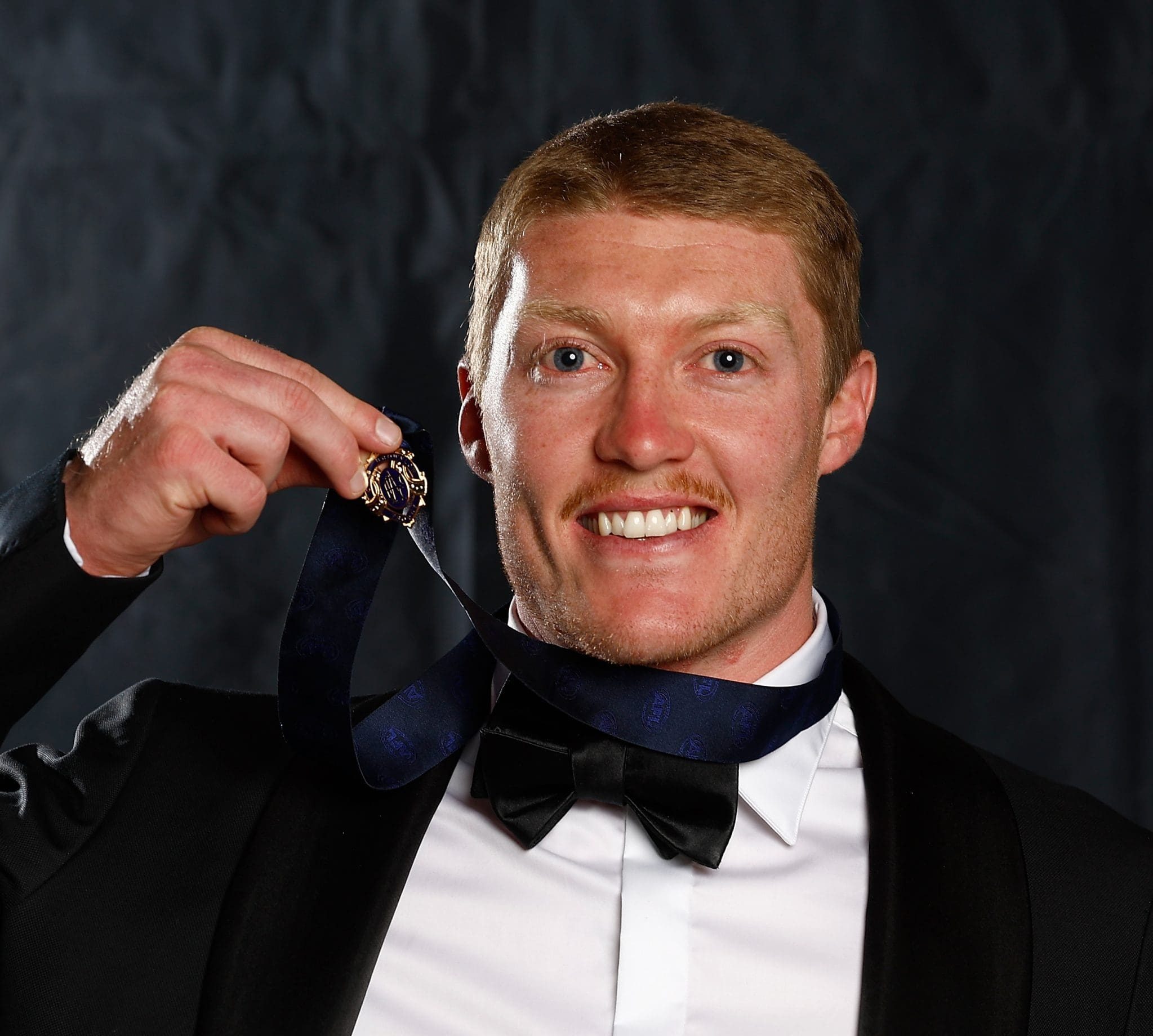
In both years, there were multiple instances where Cripps and Rowell received the three votes for being the best players on the ground when there was an apparent consensus among the media, betting agencies, and fans that their performances shouldn't have warranted a single vote, let alone three.
There were plenty of other examples from the last two seasons about followers of the game making a fuss when they perceive a player was not adequately rewarded for their performance, regardless of whether such a response is justified.
The reactions to Jack Viney (23 disposals, four contested possessions, zero clearances, and a goal) getting the three votes ahead of Nasiah Wanganeen-Milera (34 disposals, nine contested possessions, six clearances, and four goals – including the final two of the game that gave St Kilda the unlikeliest of victories) in the “Miracle at Marvel” in Round 21 last year will live forever.
The league's announcement to provide the umpires with match statistics resulted in a predictably mixed reaction from the broader AFL community.
Certain parts of the fandom felt it was a good decision; that giving the umpires more information would help them make a more informed – or more “correct” decision –more frequently. That it would be like DRS in cricket, where it removes the howler.
Other parts were less supportive, arguing that the array of stats provided to the umpires were not the best mix to truly judge a player's impact on the game or that
The men and women in green/blue/yellow would simply give the votes to the leading ball winners, rather than to the players they deemed to be the best.
I've been thinking about something different ever since the announcement was made. I have been curious as to whether we could predict the Brownlow Medal winner by only using the information that the umpires will receive, rather than a broader selection of data.
Trying to predict the Brownlow winner isn't exactly a unique idea. Every media outlet has their own version of this award, and there are numerous analysts out there (such as Andrew Whelan, the mastermind behind Wheelo Ratings) who develop custom models to pick who will take “Charlie” home on football's night of nights.
Let's see what happens. Although all 17 data points have been collected by Champion Data since 2019, I have elected to use data from 2021-2024 to train the machine learning model (teaching it what patterns to look for between the stats and the Brownlow votes that were awarded) and data from 2025 to validate it (testing whether the learned patterns are accurate in a separate data set), before turning it loose on the data from 2026 to date.
Data from 2019 and 2020 were not used to avoid potentially confusing the model by including the covid-affected 2020 season.
After gathering the data (including the result and margin of the match), adjusting the parameters to make sure the model isn't so simple that it can't capture the underlying trends, or so complex that it can't make accurate predictions with new data, removing variables that were more of a hindrance than a help, and simulating the 2026 season a few hundred times, I finally had my results.
Brownlow Medal Predictions – Post Round 15
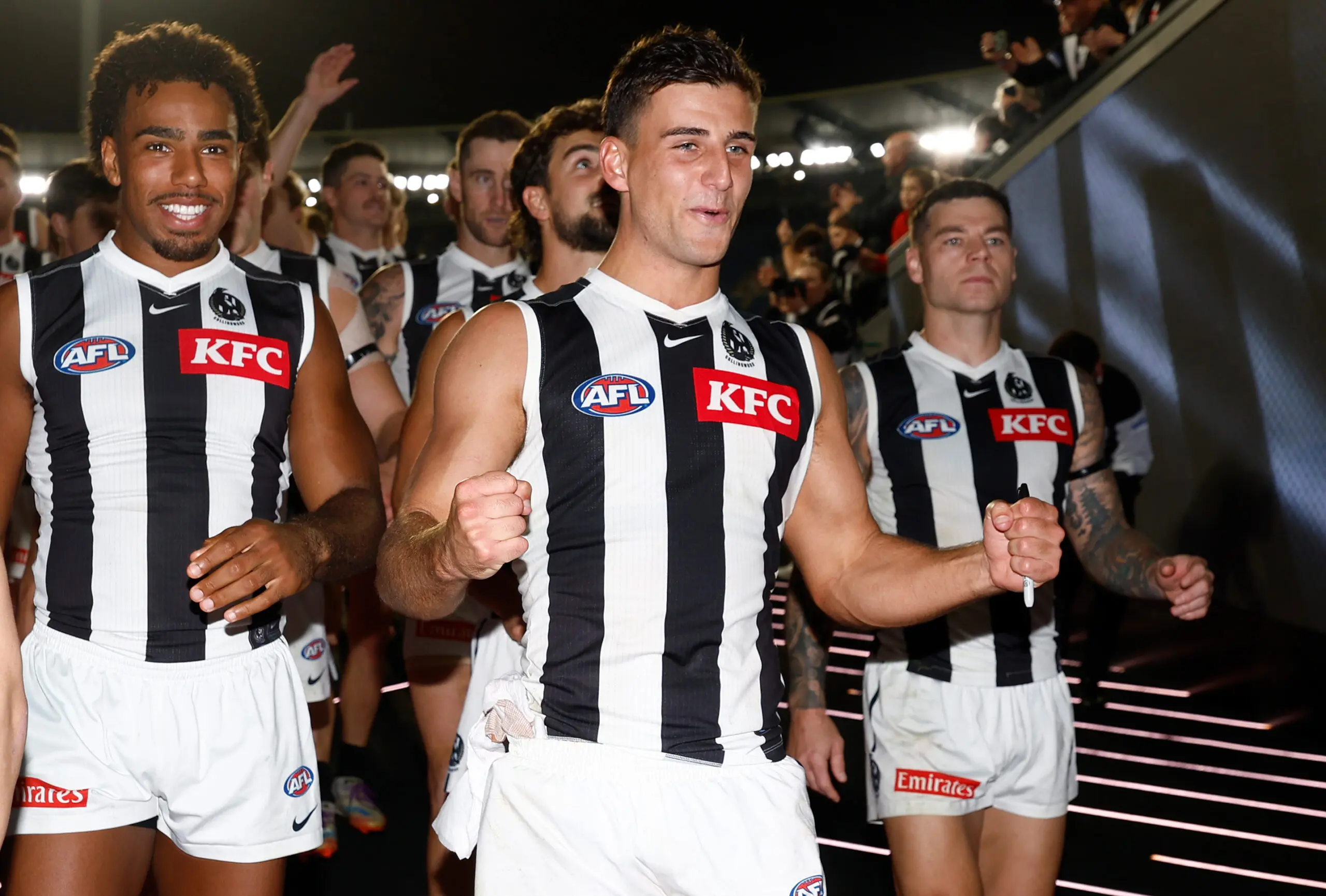
1. Nick Daicos – 32.8 votes
2. Harry Sheezel – 24.9 votes
3. Bailey Smith – 24.6 votes
4. Isaac Heeney – 21.9 votes
5. Patrick Cripps – 20.5 votes
6. Zak Butters – 19.4 votes
7. Marcus Bontempelli – 18.9 votes
8. Jai Newcombe – 16.9 votes
9. Lachie Neale – 16.0 votes
10. Max Holmes – 15.7 votes
My model predicts Daicos has polled in 12 of his 14 games – and has him as best on in 10 of those 12. Sheezel sits second after having a very strong start to the season and an almost as strong last three weeks (top rated player in North's first three and two of their last three), while Smith had a few quiet weeks early but has performed reasonably consistently since then.
My reaction to seeing the top 10 was mixed.
On the one hand, it's encouraging to see that my top 10 was broadly similar to what other models are predicting: Daicos in front, with an assortment of other midfielders (including Smith, Bontempelli, Sheezel, and Butters) in tow.
On the other hand, I was slightly disappointed that the model was so midfielder-focused (19 of the top 20 are at least part-time mids, at a minimum; the odd man out at is Hawthorn's Jack Gunston with 11.3 votes) and had the youngest son of the Macedonian Marvel comfortably in front.
And for all the chat about how Luke Jackson, Max Gawn, and Brodie Grundy have all staked their claim for being the premier ruck in 2026, none of them get a look in under the current model. Grundy has the best predicted outcome of the triumvirate (10.6 votes), ahead of Gawn (9.1 votes), and Jackson (7.2 votes).
I suppose I shouldn't be too surprised with the results. Daicos has racked up more disposals than any other player this season (497 at an average of 35.5), and my model (and presumably other predictive models) place a lot of importance on this statistic compared to other stats.
Does this mean the voices protesting that giving the umpires the stats to help inform their voting would result in them rewarding the player(s) who got their hands on the ball the most? Possibly, possibly not.
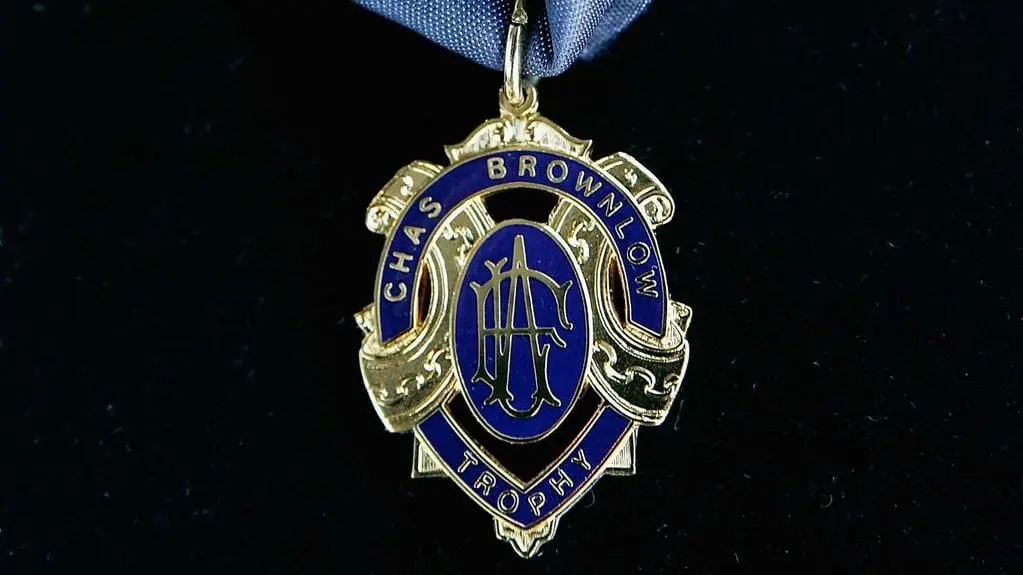
I think we need to give the umpires the benefit of the doubt until the night of the Brownlow count and we see who Matt Rowell is on stage with at the end of the night.
Daicos could have a dip in form, or get injured, and even if he stays fit and firing there's every chance unpredictability will strike again. In case you need reminding.
The 23-year-old was one of the favourites (if not the favourite) in 2023, 2024, and 2025 yet left The Palladium empty handed each time.
No predictive model is going to be perfect, even if you used every fact and figure available in Champion Data's archives and could somehow get inside the minds of the umpires. There will still be an aspect of randomness, meaning decision-making cannot be quantified neatly into a rule or algorithm.
It doesn't make it any less fun to try to guess what will happen, though.
Written by Lincoln Tracy - has a PhD in Psychology.