Once an unmissable source of analysis and insight, weekly AFL press conferences appear to be on a slippery decline into the abyss.
On Friday, I was the only external reporter at Punt Road, getting a 13-minute exclusive chat with Richmond coach Adem Yze. I had a club media staffer for company.
Earlier in the week, up bobbed another accidental one-on-one. I was the only journalist at an Essendon media opportunity with young players Sullivan Robey and Archer Day-Wicks.
I attended as I had arranged an interview with Day-Wicks, separate to the presser. Given I was the only reporter in attendance, it was mutually agreed that I ask my questions at the "presser" so the Bombers had content they could disseminate to fans.
The Essendon "exclusive" was on the same day as Michael Voss' departure. There's an excuse, I suppose.
On Friday, as I spoke to Yze, the media pack was at Carlton to talk to Voss's part-time replacement Josh Fraser.
Yes, there are reasons, but these are strange days.
No longer are mid-week pressers a must watch for fans. Long gone are the days where the most prominent journalists in the industry grill the big names.

Damien Hardwick got animated when addressing a Northern Territory journo ahead of Gold Coast's game against Port Adelaide, but such interactions are becoming increasingly rare.
When journalists ask hard or uncomfortable questions, talent tends to just toe the company line.
Those difficult questions are increasingly rare, given press conferences are generally populated with less experienced reporters making a start in the industry.
The significant Carlton discourse focused the industry's resources on Ikon Park, leaving other talking points not followed up.
Prominent media performer Kane Cornes indicated on SEN this week that he thought player press conferences offered little substance.
But fans still want to hear from them and journalists first role is to serve their audience, and, from a wider industry perspective, fans are the most important stakeholder.
“Fans get benefit from pressers. Fans love to hear their coaches and players talk. It gives them a sense of understanding about their team and the issues,” AFL Fans Association president Ron Issko said.
“Some fans might say it is a bit boring but I would say at least 70 per cent of people like pressers.”
While allocating resources as needed is not a new phenomenon, in the past the industry would not have been stretched so thin that just one reporter attended media conferences communicated days in advance.
Colleague Mark Stevens, formerly the Channel 7 chief footy reporter, last month offered his perspective about why companies are decreasingly prioritising pressers: “Ask a good question and the answer is on socials before you get back in the car. You have to take the small wins in a business saturated by quick grabs and updates on X.”
The Herald Sun's Ed Bourke famously got a one-on-one with Luke Beveridge when no other journos turned up to his post-match presser in 2024, while Adem Yze and Chris Fagan both had only one reporter at their Gather Round post-game media conference.
In an age where exclusivity in a saturated market is liquid gold in a newsroom, grilling a coach at a presser isn't worth the investment when everyone who attends gets to use the quotes.
Given internal club media publishes pressers on site imminently and emails the audio to a media distribution list, coverage can be provided remotely too.
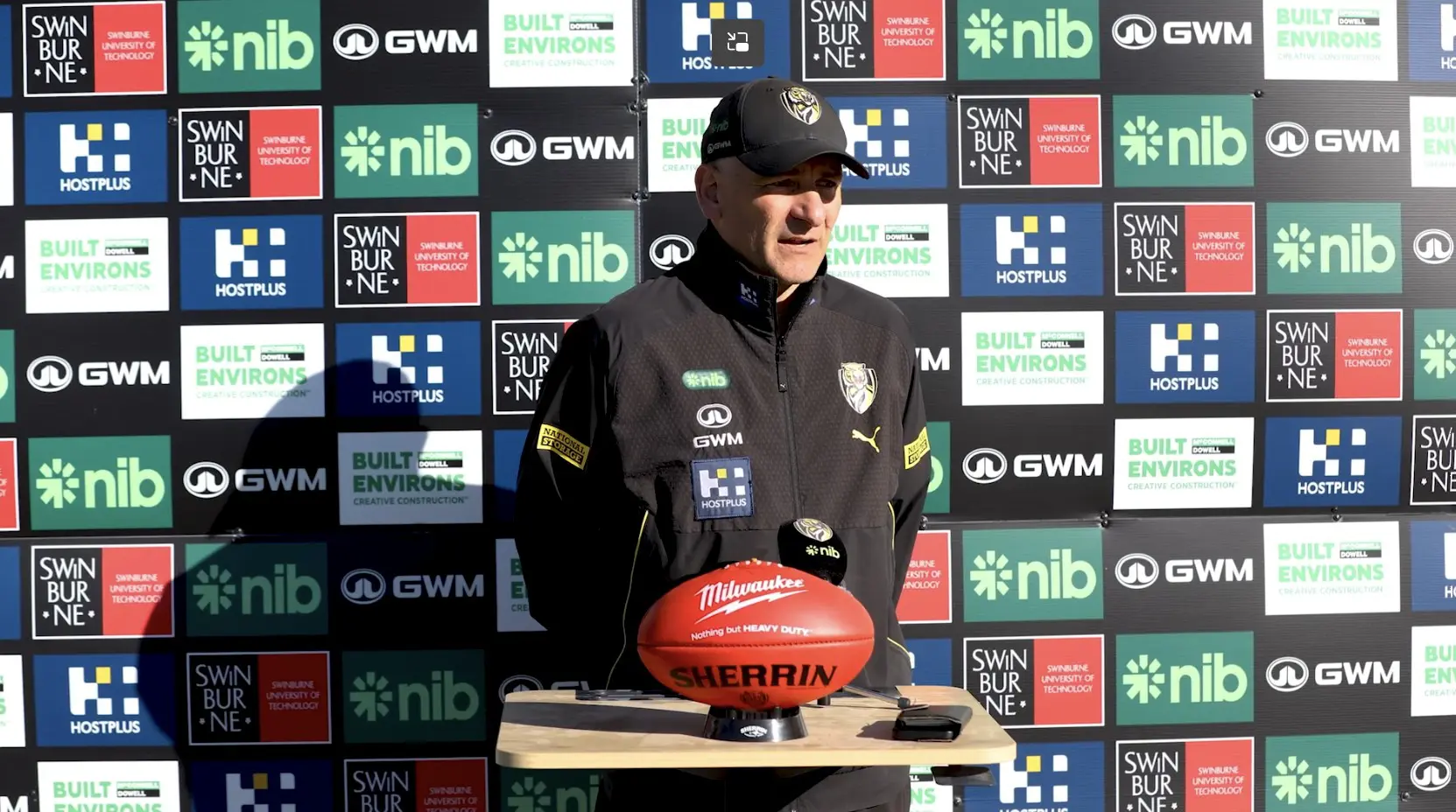
At Yze's presser, a club staffer asked three questions that were submitted by Tiger Cast, a prominent Richmond fan account. The Tigers and Yze, to their credit, handled the lonely presser with great respect and were willing to accommodate 13 minutes of questioning.
Increasingly, clubs are leveraging their own fan accounts to proliferate coverage - a great step towards increasing a greater cross-section of the digital media landscape given the notorious inaccessibility of AFL media accreditation.
But clubs overseeing their own content enables them to maintain narrative control and avoid prickly topics
Old-school traditional journalists would baulk at allowing fan accounts access - but journalists rarely get anything of substance from pressers as coaches are less willing than ever to offer valuable responses in a social media click-bait age.
In most circumstances, creators are fans first who therefore care about interesting content more than exclusivity.
Being more open aligns with the AFL's openness to content creators - last year its media arm cut more than 10 jobs as it moved towards outsourcing to external creators.
Is there merit to allowing well-established fan accounts access to media conferences to restore engagement and rigour to increasingly tired pressers?
Change is needed, or pressers will continue to become a meaningless box-ticking exercise often answered with cliches that offers nothing of value to anyone.