The AFL's crackdown on umpire contact has failed to fully ease concerns among players, with new AFLPA survey results revealing widespread uncertainty over the rule's interpretation and the fairness of its penalties.
More than two-thirds (68 per cent) of AFL players surveyed questioned the fairness of sanctions, while 45 per cent believe the rule is adjudicated at a low level and 44 per cent admit they have a low understanding of what constitutes an offence.
The AFL responded by introducing escalating penalties, including a five-offence threshold for clubs within a season and a four-charge limit for individual players across two years before further sanctions are considered.
Despite those measures, careless contact with an umpire remains one of the league's most frequent reportable offences.
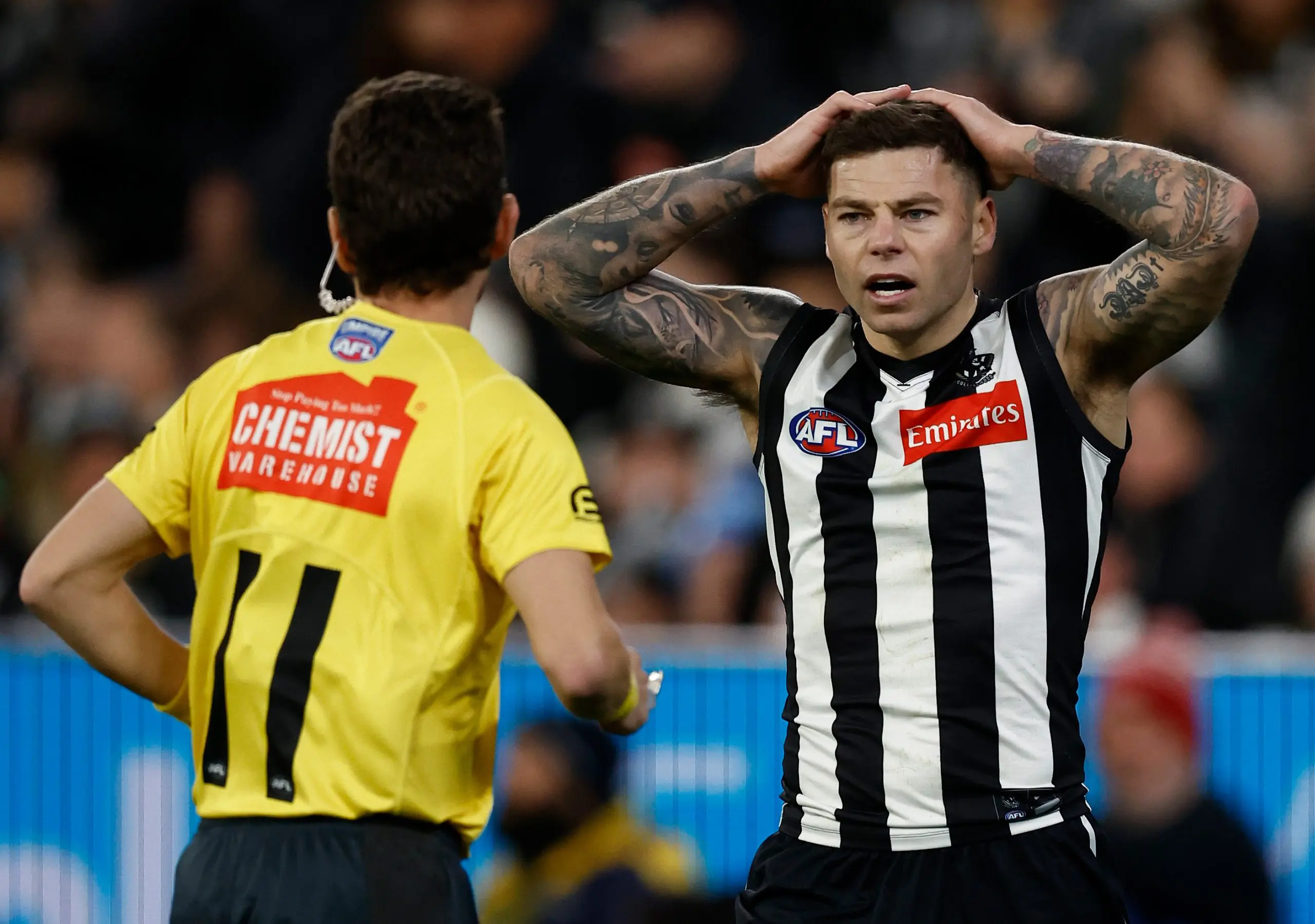
There were 90 incidents recorded last year — a 61 per cent increase year-on-year and a 350 per cent increase across two seasons — with 55 charges already recorded through Round 18 this year.
Gold Coast were the first club to be fined $20,000 by the AFL following five separate careless umpire contact charges. Sydney and Essendon are following suit, but have challenged the latest charges via written submission.
Carlton midfielder Adam Cerra became the first player to face the Tribunal under the AFL's repeat umpire contact provisions after recording four charges across two seasons, ultimately receiving a $5500 fine.
SEE MORE: AFL Umpire Contact Ladder - How far away from a mammoth fine is your club?

The increased focus on umpire protection has contributed to a broader rise in financial penalties across the competition - up 22% year-on-year and up 217% over two years.
But the clear rise in financial sanctions hasn't reduced the number of incidents for the five years prior (2019-2023), with an average of 204 charges laid by the Match Review Officer (MRO). The number jumped to 313 (2024) and then to 387 last year.
Player feedback suggests, for many low-level charges, a free kick would be an effective deterrent.
“The current system feels overly rigid and lacks common sense. It focuses too much on the outcome rather than the action itself, which makes decision-making inconsistent," says an AFL player in the AFLPA Insights and Impact Report.