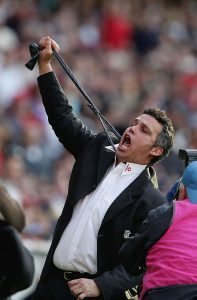
Coaching in the AFL is a chalice that can be poisoned or make you immortal.

That's the deal made when someone agrees to become a head coach of an AFL club 99.9 per cent of the time: If you win a premiership, you are a success; anything less and you have failed. It's as ruthless a business as any.

The pressure internally and externally, the media scrutiny, would become all-encompassing. Just look at what Carlton coach Michael Voss is experiencing right now as people list the best person to become the Blues coach while he is still at the helm.

But for all its flaws, it is so heavily desired by the competitive few who seek eternal glory and have a deep burning desire to become a premiership-winning coach.

Having been born in the first year of the 21st century, that is where this ranking list shall begin. The work of coaches from 2000 to the present will be the main source of argument, but the ability to look further back in time at their exploits can be used as a form of tie-breaker.

To enter the top 10, a coach must have won a premiership, so St Kilda's Ross Lyon, despite leading two of the league's "smaller teams" to a total of three (four if you count the draw) grand finals, is omitted from the pool.

Mark Williams - Port Adelaide, 2004

Williams: Pies can't make finals
MELBOURNE, AUSTRALIA - SEPTEMBER 25: Mark Williams, coach of the Power, shows his emotions with minutes to play during the AFL Grand Final between the Port Adelaide Power and Brisbane Lions at the Melbourne Cricket Ground, September 25, 2004, in Melbourne, Australia. (Photo by Mark Dadswell/Getty Images)

A number of candidates were vying for this 10th spot. With Essendon coach Kevin Sheedy was incredibly unlucky to miss out, given he led the Bombers to a near-perfect season in 2000 when they lost only one game.

But Williams took the Power past being the "chokers" of the league and to a maiden flag. Against a three-time reigning premier juggernaut in Brisbane, if you don't mind as well. The fact that interstate premierships are arguably harder to win also plays into the calculations here.

Williams and his captain Warren Tredrea took Port Adelaide to three consecutive minor premierships and found it was third time's a charm as they beat the Lions by 40 points.

The man nicknamed "Chocco" had his moment in the sun as he famously motioned his tie as a chokehold as he walked down to the ground late in the final term, gesturing to the crowd that he and his players had slayed the Brisbane giant and shed the chokers label.

After finishing in 14th place in 2000, Williams' Power made it four consecutive top-four finishes and was one of the most dominant teams of the early 2000s.

Luke Beveridge - Western Bulldogs, 2016

Beveridge puts Bulldogs in strong position for successful defense
MELBOURNE, AUSTRALIA - OCTOBER 01: Luke Beveridge, Senior Coach of the Bulldogs and Easton Wood, Acting Captain of the Bulldogs, present injured captain Robert Murphy with a premiership medal during the 2016 Toyota AFL Grand Final match between the Sydney Swans and the Western Bulldogs at the Melbourne Cricket Ground on October 01, 2016, in Melbourne, Australia. (Photo by Adam Trafford/AFL Media/Getty Images)

What Beveridge achieved at the Western Bulldogs in his early days was nothing short of incredible.

A club that held the then-longest premiership drought in the league was stuck at the bottom of the ladder when Beveridge arrived in 2014 and had just lost its captain, Ryan Griffin, to GWS.

Within three years, Beveridge had turned that motley crew into a late-season freight train from hell in 2016. 

The Bulldogs' run to their first grand final since 1961 and first premiership since 1954 will make him part of Footscray and AFL folklore for the rest of footballing history.

He also led the Bulldogs to another grand final in 2021.

Could have been further up on this list had he capitalised on the talent that he has had at The Kennel in recent years, but consistency remains an enemy of him and the Bulldogs.

However, nothing can take away what he did for the people of the western suburbs of Melbourne a decade ago.

Paul Roos - Sydney, 2005

Sydney Swans Team Reception
SYDNEY, NSW - SEPTEMBER 25: Sydney Swans coach Paul Roos shows off the AFL trophy during the team reception held at the Sydney Cricket Ground, September 25, 2005, in Sydney, Australia. (Photo by Chris McGrath/Getty Images)

In a similar vein, who could forget Roos bellowing, "Here it is", following Sydney/South Melbourne's first premiership in 72 years.

Roos was a key part of the coaching tactical change to dry up scoring and strengthen defence during the mid-2000s - a move that has troubled the AFL and made CEO after CEO change and adjust rules to bring back big scores ever since.

The Sydney-West Coast contests between 2005-06 were one of the best rivalries football has seen, with six consecutive games (which included two qualifying finals and grand finals) having a collective margin of 13 points.

Roos and his counterpart, John Worsfold (an unlucky omission from the list), duelled it out across that period, with both coaches taking a scalp.

But Roos being able to bring a premiership cup to a club that had moved states and thought it might never see one again makes him an immediate coaching great.

He is also boosted up this list thanks to his role as coach of Melbourne from 2014-16, when he helped rebuild the embattled club before passing the baton to eventual premiership coach Simon Goodwin.

John Longmire - Sydney, 2012

One of football's great minds and leaders, and someone who appears destined to one day pick up the coaching reins again.

Having taken over from his predecessor at the Swans and this list, Roos, Longmire quickly forged his own name among AFL ranks and history as he took Sydney to its second grand final victory in seven years in 2012.

The grand final was a memorable see-sawing affair that saw Longmire's Swans outlast Alastair Clarkson's Hawks.

The Hawks-Swans rivalry would continue in 2014, when Clarkson got revenge on Longmire in the grand final. 

Longmire led Sydney to an incredible further three grand final days, losing to the Bulldogs in 2016, before getting thumped by Geelong in 2022 and again by Brisbane in 2024.

Despite the tough ending to his time as head coach, Longmire did an incredible job to keep an interstate club - and one in rugby heartland for that matter - alive and thriving as the Swans featured in finals every year bar two during his reign from 2011-24.

An incredible achievement from someone who should not be lost to coaching.

Mark "Bomber" Thompson - Geelong, 2007, 2009

Bomber Thompson whacks Cats' culture
GEELONG, AUSTRALIA - SEPTEMBER 30: Geelong Cats coach Mark Thompson and captain Tom Harley hold up the premiership cup during a Geelong Cats AFL Premiership Celebration day at Skilled Stadium on September 30, 2007, in Geelong, Australia. (Photo by Mark Dadswell/Getty Images)

The coaching game didn't go Bomber's way much during his first six seasons at the helm. 

Geelong's rebuild was slow and filled with ups and downs, with the 2005 edition of the Cats looking promising, before the club plunged back down the ladder in 2006. 

Thompson's seat was as hot as any at the start of 2007 when Geelong's consistency again shone through; however, that all changed within the blink of an eye.

All of a sudden, Thompson and his players had secured the biggest grand final victory in history (119 points against Port Adelaide). The Cats then made the grand final again in 2008, before securing a second flag in 2009 in a memorable tight grand final against a dominant St Kilda.

Yes, Geelong had a litany of stars, highlighted by the fact that nine Cats made the 2007 All-Australian team, but it is quickly forgotten how Thompson and his players broke the curse that seemed to plague Geelong in grand finals.

The Cats hadn't won a flag since 1963 and had featured in five grand finals in the 44 years following, failing in each despite their elite talent.

Bomber was an integral part of their rebuild following a mediocre end to the 1990s for the club.

Alastair Clarkson - Hawthorn, 2008, 2013, 2014, 2015

Best 22: Premiership players since 2000
MELBOURNE, AUSTRALIA - OCTOBER 04: Alastair Clarkson, the coach and Luke Hodge, the captain of the Hawks, pose with the 2013, 2014 and 2015 premiership trophies during the Hawthorn Hawks AFL Grand Final fan day at Glenferrie Oval on October 4, 2015, in Melbourne, Australia. (Photo by Quinn Rooney/Getty Images)

The most controversial ranking on this list, given Clarkson has won the equal-most flags of any coach this century and led Hawthorn to a famous three-peat across 2013-15.

Clarkson was a key figurehead behind Hawthorn's revival from being a middling-bottom end of the ladder side throughout the mid-early 2000s. 

After taking over as head coach for the 2005 season, the Hawks received an influx of generational talent in the form of Lance Franklin, Jarryd Roughead and Jordan Lewis through the draft. These young guns would be the catalyst for Clarkson's rebirth of the Hawks as the young side made finals two seasons later, before producing a major upset in the 2008 grand final. Downing a scary Geelong side by 26 points.

The Hawks would plateau for a few seasons before going on a run of four straight grand final appearances from 2012-15, which resulted in a hat trick of flags for the likes of Clarkson, Roughead, Lewis, Luke Hodge, Cyril Rioli and Sam Mitchell.

The reasoning, perhaps unfair, for Clarkson being placed fifth on this list is simply due to two main reasons. The first being that Clarkson had a surplus of incredible assistant coaches by his side that would go on to be premiership coaches in their own right, in Chris Fagan, Damien Hardwick, Adam Simpson, Luke Beveridge and Leon Cameron (made a grand final).

Secondly, because we like or hate it, interstate flags are harder to win than at mainstream clubs in Victoria. And there are a couple of interstate coaches that sit above him on this list.

If Clarkson can lead North Melbourne to a premiership in his second stint as coach, he will move immediately to the top of the list and will stay there forevermore.

Chris Fagan - Brisbane, 2024, 2025

MELBOURNE, AUSTRALIA - SEPTEMBER 27: Harris Andrews of the Lions, Chris Fagan, Senior Coach of the Lions and Lachie Neale of the Lions celebrate with the Premiership Cup on the dais during the AFL Grand Final match between the Geelong Cats and the Brisbane Lions at the Melbourne Cricket Ground on September 27, 2025 in Melbourne, Australia. (Photo by Michael Willson/AFL Photos via Getty Images)

What Chris Fagan has done at Brisbane has been nothing short of astonishing. 

Yes, the Lions have been helped by Academy and father-son loopholes, but nothing should detract from how Fagan helped turn the club around from being a basket case in a rugby-obsessed state, to a two-time - and possibly three-time - reigning premier with sell-out crowds week on week.

The other incredible part of the story is that Fagan never played at the level himself, thus demonstrating that even without the lived experience of playing in the V/AFL, his football mind was still capable of producing a powerhouse.

Fagan took over the club in 2016 when the Lions hadn't played finals for eight seasons and had finished 17th for the previous two years. Brisbane would win the wooden spoon the following year before leaping to a second-placed finish in 2019.

Doubts were cast over whether Fagan could be the man to take the Lions back to the promised land as the club choked and spluttered its way through the next three finals campaigns.

Fagan and his troops were then handed a heartbreaking loss to Collingwood by less than a goal in 2023, before rebounding like not many grand final losers before them to dominate the next two deciders against Sydney and Geelong by 60 and 47 points, respectively.

Chris Scott - Geelong, 2011, 2022

Geelong coach Chris Scott gives clear indication of where future lies, addresses Suns job
MELBOURNE, AUSTRALIA - SEPTEMBER 24: Chris Scott, Senior Coach of the Cats, raises the Premiership Cup during the 2022 Toyota AFL Grand Final match between the Geelong Cats and the Sydney Swans at the Melbourne Cricket Ground on September 24, 2022, in Melbourne, Australia. (Photo by Daniel Carson/AFL Photos via Getty Images)

Scott hasn't just become a two-time premiership-winning coach at Geelong; he and the club have changed how teams across the league prepare during the off-season, how clubs trust their players, how sides train week-to-week and how the competition treats and regards its veteran players.

The now-50-year-old won a premiership in his first season at the helm at 35. No mean feat even if it was off the back of Thompson's dominant reign at Geelong from 2007-10.

Scott and his Cats would go on to feature in an incredible 10 preliminary finals (2011, 2013, 2016, 2017, 2019, 2020, 2021, 2022, 2024 and 2025) since he took over. That's 10 out of 15 seasons he has featured in at least the second last week of the season.

The Cats have only missed finals twice during his time, finishing 10th in 2015 and 12th in 2023.

Scott's second grand final victory boosted him up this list as he turned from being an unbelievably consistent and quality coach to a legend of the game when he and Geelong trounced Sydney by 81 points in 2022.

Not too many people have been as consistently successful and have impacted the game on and off the field as much as Scott.

Leigh Matthews - Brisbane, 2001, 2002, 2003

Ranking the 10 best Grand Finals of the 21st century
MELBOURNE - SEPTEMBER 28: Leigh Matthews, coach, Alastair Lynch #11 and Michael Voss #3 celebrate with the Premiership Trophy after the 2002 AFL Grand Final between the Collingwood Magpies and the Brisbane Lions played at the Melbourne Cricket Ground in Melbourne, Australia on September 28, 2002. (Photo by Rob Cianflone/Getty Images)

Matthews is regarded as one of the most respected minds in the history of the AFL, and for good reason.

He was one of the best players of all time, who became one of the greatest coaches as well. 

Matthews, like Fagan after him, took Brisbane from a rabble to a rampaging beast. The Lions took over the competition in the early 2000s and were a formidable force for anyone who went near the likes of Voss, Jason Akermanis, Simon Black, Jonathon Brown, plus 18 others.

Brisbane achieved the first three-peat of premierships since Melbourne in the mid-1950s. And did it against powerhouses Collingwood and Essendon on their home deck, the MCG.

In reality, these top five coaches could all be split by whiskers, and the one that helps Lethal stand out is his "tie-breaking" premiership win with Collingwood in 1990. A victory that broke a 32-year drought and the "Colliwobbles curse" which saw the Pies lose eight grand finals between 1960 and 1981.

Damien Hardwick - Richmond 2017, 2019, 2020

Champion Data predicts every team's premiership chances
MELBOURNE, AUSTRALIA - SEPTEMBER 30: Damien Hardwick, Senior Coach of the Tigers and Trent Cotchin of the Tigers hold up the premiership cup during the 2017 Toyota AFL Grand Final match between the Adelaide Crows and the Richmond Tigers at the Melbourne Cricket Ground on September 30, 2017, in Melbourne, Australia. (Photo by Adam Trafford/AFL Media/Getty Images)

No matter who gets picked to be the number one coach of the 21st century, fans will be up in arms from all parts of the country. But this writer believes that Hardwick is the greatest coach we have seen since the clocks moved from 11:59 pm, December 31, 1999, to 12:00 am, January 1, 2000.

Had this been stated a decade ago in 2016 after Hardwick had led Richmond for seven mediocre seasons, it would have had to have been a poor joke. But that's nearly the point. Hardwick turned his Richmond side from consistent failures into a three-time premiership-winning Goliath.

And with arguably less talent than any of the other coaches in the top five had access to. 

Yes, the Tigers had Dustin Martin, Trent Cotchin, Jack Riewoldt, Tom Lynch, Alex Rance (one flag), but it was the lesser names that turned Richmond's fortunes around. The likes of Kane Lambert, Jason Castagna, David Astbury, Kamdyn and McIntosh

What also changed the luck at Punt Road was Hardwick's ability to pivot and change his on and off-field philosophy at the end of 2016 - when he nearly lost his job - that then shaped how clubs and coaches lead their players to this day.

Hardwick has since taken over at Gold Coast, and while he has a lot more talent to play with at the Suns than he did at the Tigers, he has already taken them to new heights and appears on track to guide them through the club's first premiership tilt.

JOIN THE DISCUSSION