Brisbane and Carlton are the two teams that have benefited most from the change in ruck rules over the pre-season.
The Blues, despite losing Tom De Koning, have managed to increase their scores from centre stoppages, while the reigning premiers have nearly added two goals from the score source each week on average.
A sample size of seven weeks is ample time to assess how the new ruck rules have impacted scoring.
The AFL scrapped the centre bounce, given issues with umpire injury as well as inconsistent bouncing, leading to a strict ball-up.
Competing rucks will now be unable to cross the centre line before engaging with their opposition ruck. This was born from a desire to see the jumping rucks return to the game.
The AFL's wish has come true.
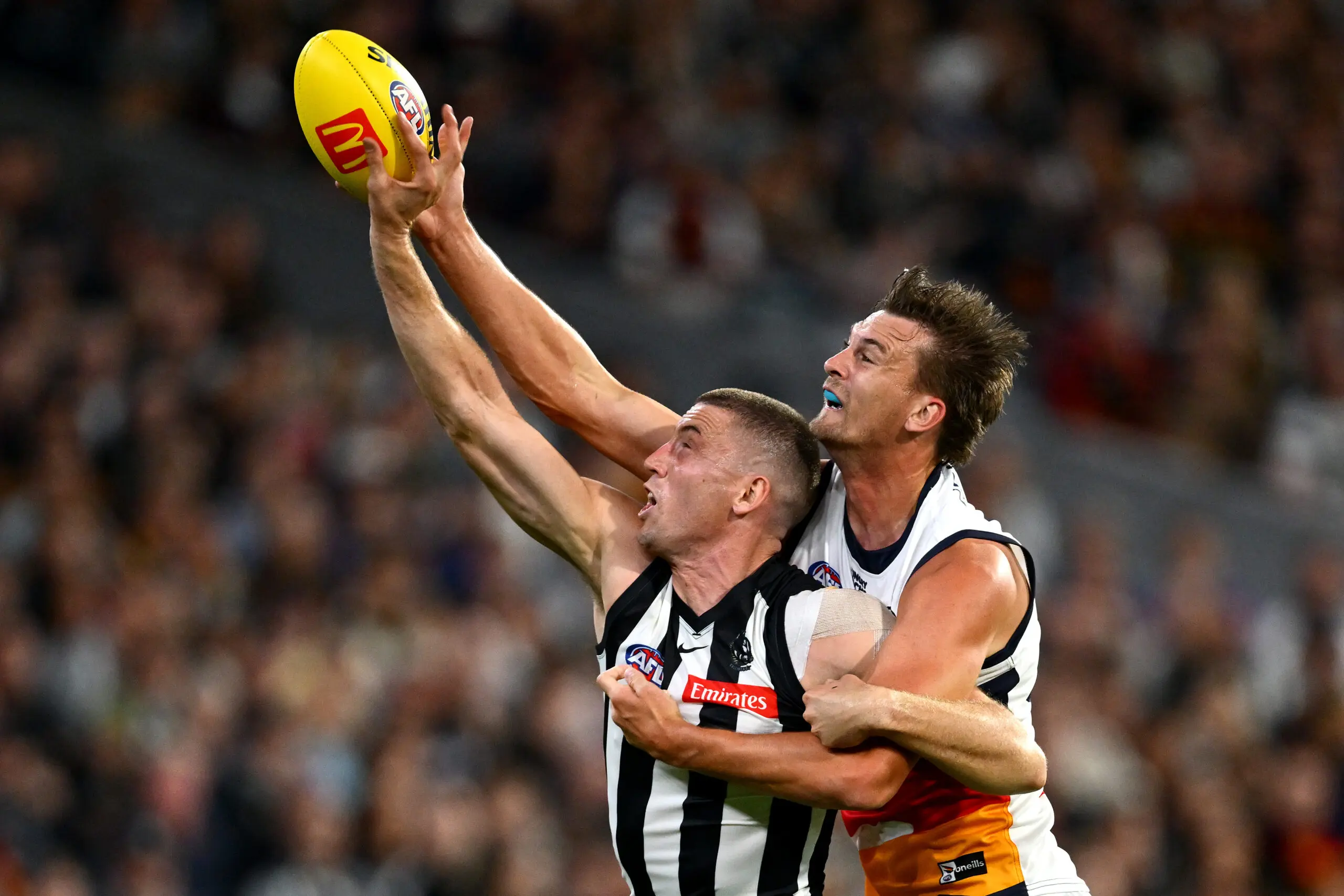
The likes of Brodie Grundy and Luke Jackson have capitalised on the new rules, while the update has allowed athletic types such as Ned Reeves, Lachlan McAndrew and Jordon Sweet to emerge from the shadows.
It has, however, left behind the crafty, body-work type ruckmen, like Darcy Cameron, who has shouldered a smaller load as Oscar Steene continues to develop.
The same can be said for Kieren Briggs, who made way for Nicholas Madden at the Giants.
But how much of an impact has these rule changes had on scoring?
Let's look at the numbers.
In 2026, the AFL average of centre ball-up scores is 12.8 points per team each week. That number is a competition high over the past decade.
It was an increase from last year's 11.4.
The 6-6-6 formation at centre ball-ups still contributes a significant amount to the scoring as clubs are unable to defend against a surging opposition from the midfield.
But who has truly benefited from the change?
The reigning premiers, Brisbane, jumped from 16th last year to 1st in 2026, more than doubling its scores from centre stoppages.
The Lions were among the bottom rungs of the ladder, recording 8.3 points on average in 2025. They've soared to 18.3.
Darcy Fort doesn't rank among the best ruckmen in the competition, but has been able to nullify his opponents, providing his on-ballers opportunities to swoop on the loose ball, and clearly get aggressive given the Lions' major uptick in scores.
Sydney, who are the flag favourites, have utilised the skill-set of Brodie Grundy to full capacity (89 hitouts to advantage; 20 more than the next best), adding, on average, 5.5 points per game from the centre-ball up.
The Swans have gone from 14th in the league to 4th.
St Kilda's large free agency play for De Koning has worked wonders in this facet of the game, adding five points to its tally weekly from the score source, whilst leaping from 13th to 5th.
Ironically, the Blues have turned their centre stoppage woes around despite losing the leaping ruckman to the Saints, adding on average, 5.7 points each round.
Marc Pittonet's form as No.1 man shouldn't be understated, ranking in the top 10 for hitouts to advantage whilst also sitting fourth for centre clearances among the game's big men.
A breakdown of centre-ball up scores (points)
| 2026 | 2025 | Difference | |
| Brisbane | 18.4 (1st) | 8.3 (16th) | 10.1 |
| Carlton | 16.9 (3nd) | 11.2 (10th) | 5.7 |
| Sydney | 15.3 (4th) | 9.8 (14th) | 5.5 |
| St Kilda | 15.0 (5th) | 10 (13th) | 5 |
| West Coast | 10.4 (14th) | 6 (18th) | 4.4 |
| Essendon | 12.4 (8th) | 9.1 (15th) | 3.3 |
| Gold Coast | 16.9 (2nd) | 14.2 (3rd) | 2.7 |
| Geelong | 14.9 (6th) | 13.4 (4th) | 1.5 |
| Collingwood | 12.1 (9th) | 10.7 (12th) | 1.4 |
| Richmond | 8.3 (18th) | 7.2 (17th) | 1.1 |
| Adelaide | 10.9 (12th) | 10.8 (11th) | -0.1 |
| Fremantle | 11.7 (10th) | 12 (8th) | -0.3 |
| Port Adelaide | 9.7 (17th) | 11.6 (9th) | -1.9 |
| GWS | 10.6 (13th) | 12.8 (6th) | -2.2 |
| Melbourne | 10.1 (15th) | 12.3 (7th) | -2.2 |
| Western Bulldogs | 14.6 (7th) | 17.2 (1st) | -2.6 |
| Hawthorn | 10.1 (16th) | (13.1) 5th | -3.0 |
| North Melbourne | 11.6 (11th) | 14.7 (2nd) | -3.1 |
(Data provided by WheeloRatings)
On the flipside, North Melbourne's 2026 return has been the most disappointing to date, with a negative return of 3.1 points.
Ruckman Tristan Xerri missed three weeks through suspension, which no doubt contributed to the Kangaroos' struggles.
The Western Bulldogs' fall from grace as the best centre bounce team last year to middle of the table is damning, but can be explained by Tim English's absence, as well as Tom Liberatore in recent weeks.
Not too mention the void left by Sam Darcy up forward.
Melbourne, Port Adelaide and Hawthorn have seen a major dive in centre-ball up scores from last year.
The Power were ranked 9th in 2025, averaging 11.6 points per game. So far this year, they sit 17th with 9.7 points each week, narrowly topping the struggling Tigers.
The Hawks' two-ruck tandem wears out opposition, but Reeves and Lloyd Meek's dominance has struggled to convert centre-ball ups to score.
Sam Mitchell has seen a dramatic drop from 5th (13.1 points) last year in scores from the source to 16th (10.1)
Despite Max Gawn's extraordinary performances, the Demons haven't capitalised when the game has been restarted in the middle of the ground, turning a 7th spot to 15th, losing on average, 2.2 points per game.
The impact of the rule changes will be a close watch of league football boss Greg Swann, and whether they'll hold a spot in our game.
As for the ruck changes, it has welcomed back jumping ruckmen but the stats haven't necessarily favoured those who leap towards the ball.