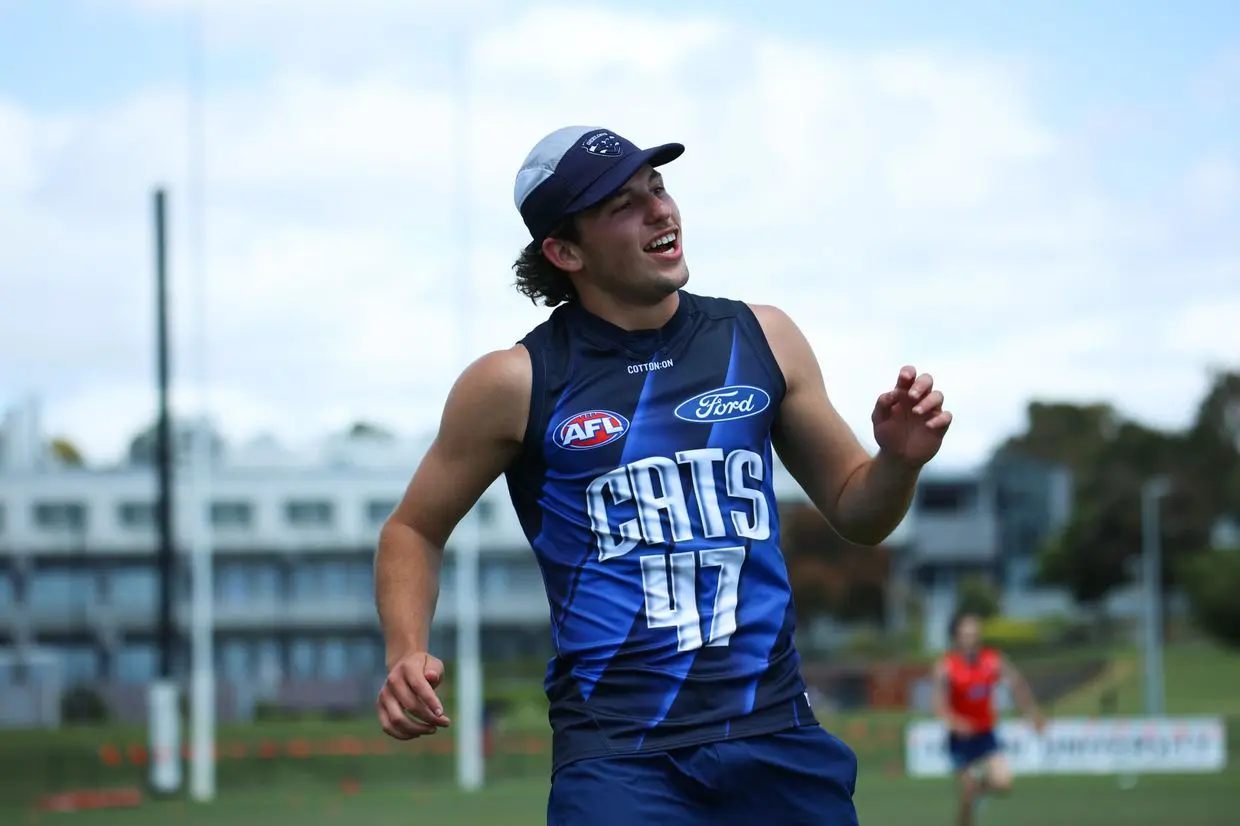
The comparisons came thick and fast for Geelong's Jhye Clark when he was taken with Pick 8 in the 2022 National Draft.
His attack on the football, natural leadership and the general look of it screamed "Joel Selwood". Since then, from the outside at least, it has seemed to weigh heavily on Clark as he has struggled to live up to the heights of Selwood - who went Pick 7 in the 2006 National Draft - in his opening few seasons.
One game in his first year, followed by 15 in his second, 10 in his third and only three games across the first three quarters of 2026; his fourth year at the level and the last of his contract.
It seemed perhaps the 181cm bull was not going to make an impact for the Cats as the club weighed up contract options for 2027 and beyond. However, a surprise move to halfback late in the season has found a home for Clark, and he has made the most of his opportunity.
Since Round 19, Clark has averaged 18 disposals and 6.4 marks across five matches.
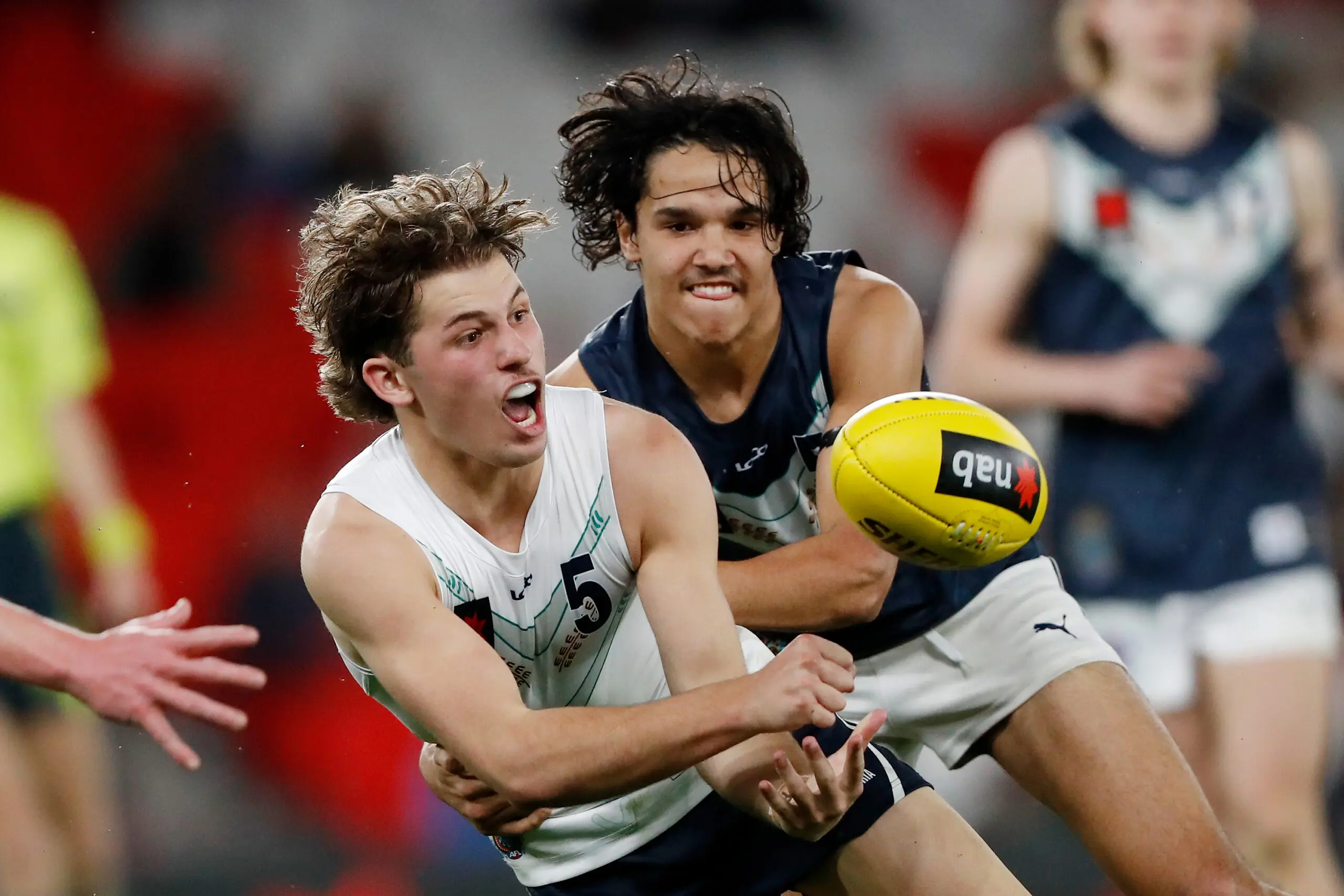
Clark's former Talent League coach and current coach at Geelong Falcons Paul Corrigan said that while the weight of expectation would have hung heavily on a lot of young players, he always knew Clark had what it took to break out at AFL level.
"(Clark's) attack on the ball was huge," Corrigan told Zero Hanger when thinking back on the now 22-year-old as a junior.
"I think that's why he got the comparisons to Joel. He is just fearless sometimes and probably a bit silly at times the way he went into contests, but that was just him, and you were never going to stop him in what he did. Most times he'd come out with the footy as well."
Every season, on repeat, the top players from that year's particular draft class are given comparisons to modern-day greats of the game.
Clark was the next Selwood, Sam Lalor the next Dustin Martin, Jamarra Ugle-Hagan the next Lance Franklin.
Corrigan believes that while it is a useful tool to describe traits of a draftee, pundits and draft experts should be wary of making direct comparisons between 17- or 18-year-olds and champions of the game.
"I don't like doing it," he said.
"I don't mind the comparisons when you're talking about maybe some of their qualities and craft that they possess as a young kid, but I think when you're comparing to players that have had 14 or 15-year careers at AFL level, and these guys haven't even started yet, it does put some outside pressure and noise on these boys coming through.
"We try and talk about it from our perspective at the Falcons and Vic Country just to be your own person, and it is hard when you see that noise, but try not to listen to it. Be honoured by it. But I think just move on with your own individual career and what that looks like."
After Clark's recent spike in form, he was rewarded with a two-year contract by his hometown club.
While his best football so far has been played across halfback, Corrigan believes Clark still has the traits of an AFL midfielder and thinks in time Clark will move into the midfield alongside the likes of Bailey Smith and Max Holmes.
He led the Falcons during his draft year with Corrigan, who is also an assistant coach for the Under-18s Vic Country side, and Clark is developing a close relationship as captain and coach.
Corrigan said Clark is very level-headed and the outside noise would not have bothered him in the early stages of his career. His former coach believes it's continuity in Clark's body and football that has helped him become comfortable in the Cats' senior side.
"Early on, he had a few injuries and whatever, and he just couldn't get a clean run at it," he said. "I think that probably hampered him a little bit in the sense of moving into that AFL system and VFL system when he went to the Cats.
"He knew himself, the type of player that he was. Some of those players who are top-end draft picks are always going to get compared to players that are sitting in the AFL. I just think he took it in his stride. He knew what his strengths were, what he had to work on.
"I think just the unfortunate timing of the injuries probably held him back a little bit, but I think that's probably held him in good stead to where he sits now.
"He was such a respectful kid to not only his peers, but to the people around our club as well. And his biggest asset was his ability to bring people together.
"When you look at the Falcons and, you know, bringing kids from community football, local football together to formulate a team, that was one of his strengths throughout his 18th year and one of his leadership qualities."
With the possible recruitment of Port Adelaide superstar Zak Butters to Geelong this off-season, the Cats' engine room could prove a difficult group to crack.
If that's the case, Corrigan said Clark can cement himself as a halfback given the natural skills and work rate he possesses, which made him so highly touted as a draftee.
"We sort of saw (his halfback capabilities) in snippets at the Falcons," he said.
"We pushed him into halfback at times, and he's uncanny because he's really strong overhead for his size. He reads the ball well in the air, and we saw that at our level also.
"He actually has got pretty good football IQ. He defends hard. But what he also does is he covers really well at ground level, so he gets back and supports. He's a very good groundball interceptor as well.
"I think that just comes naturally from the work that he's done through the midfield as well. So his one-on-one body work stuff is strong because of the stoppage work that he's done. That's why I think he's really suited to halfback at this stage."