Silence swept across Optus Stadium as Gold Coast's David Swallow kicked the match-winning point sinking the hearts of 57,000 Fremantle supporters, turning what had seemed a season-saving victory into a devastating defeat.
After the distasteful Elimination Final defeat, Fremantle have surpassed all expectations on what was in store for them in 2026 getting off to a blistering 12-1 start to the season.
A few new signings around the edges, an adjusted gameplan and the progression of key talent has seen the Dockers go from an above average team to a juggernaut of the competition with no signs of slowing down.
Built from the back
As always in Justin Longmuir teams, it starts in the defence.
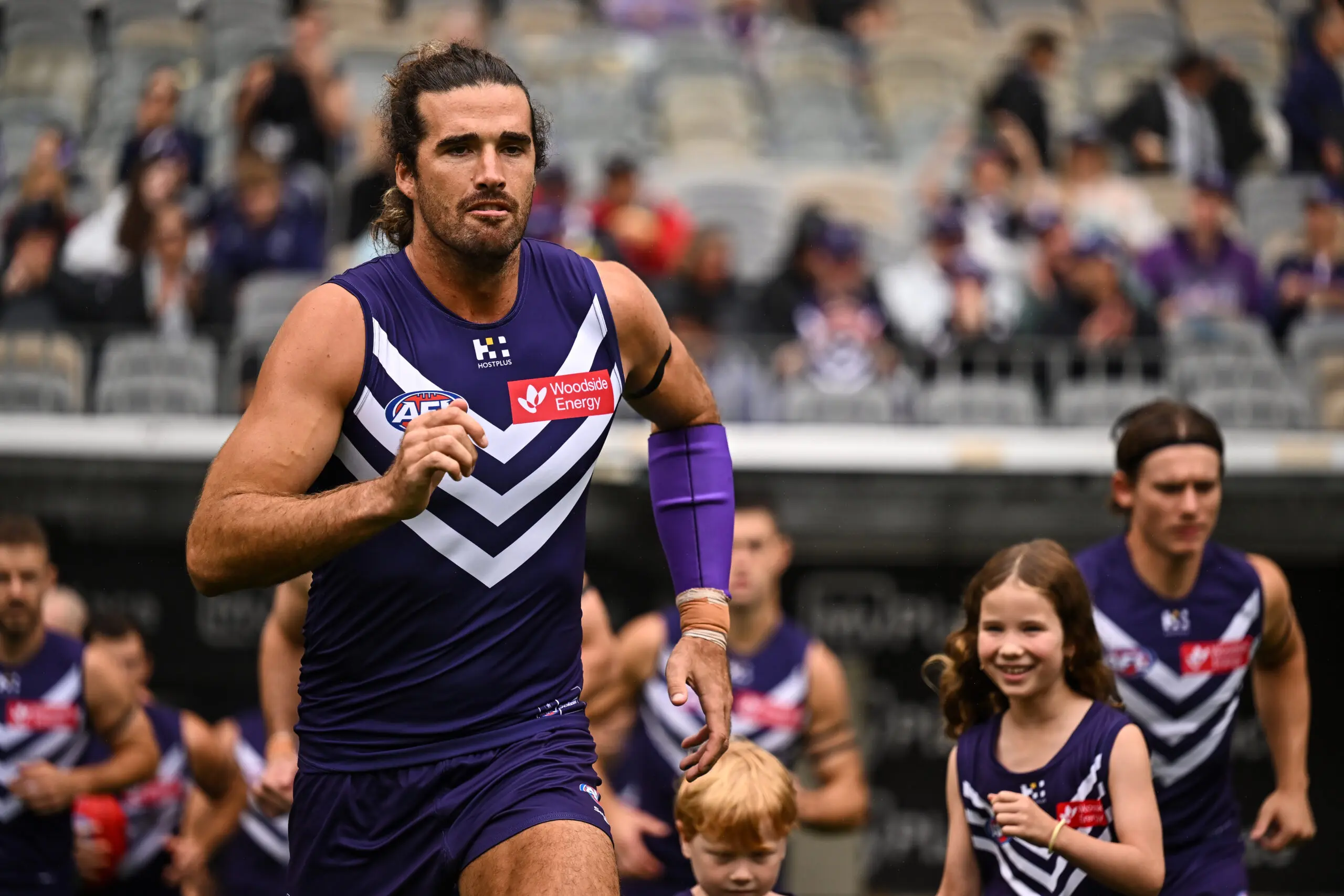
Led by stoic captain Alex Pearce, Fremantle currently has the first rated defence in the AFL allowing just 68 points per match to opposition. Pearce's leadership from full back is crucial in organising the Dockers in the back half, along with their transition up the ground.
Alongside Pearce is an elite mix of medium and tall defenders, all great ball users and elite stoppers when needed.
Both Luke Ryan and 2025 All-Australian defender Jordan Clark set up the attack from the back half of the ground moving up in transition. The pair are averaging a combined 26.3 effective kicks and just shy of 10 rebound 50s per match, ranking as one of the top defensive pairs in the game.
The aforementioned ‘big three' gather most of the credit for Freo's defensive success, however the rest of the defence is what holds it all together.
The lengthy half-backs of Heath Chapman, Judd McVee and Karl Worner cause nightmares for opposition forwards as they often defend players much smaller in size.
In the standard Fremantle back seven, the shortest player is McVee at 185cm.
The Dockers defence has always been strong, but the change in gameplan has elevated them from a slow, chip-mark team to a strong attacking brand ranking third in scores from transition from defensive 50.
The engine room
The Dockers midfield brigade has been slowly building over the last several seasons.
In previous years Fremantle heavily relied on the production from its major ball winners Caleb Serong and Andy Brayshaw. If one of them were shut out of the game, it was very difficult for the Dockers to win the midfield battle, diminishing their chances of victory.
This is no longer the case for Freo as the attacking midfield ensemble of Murphy Reid, Shai Bolton and Hayden Young has built into a dynamic group, dominating out of stoppage and leading to aggressive scoreboard impact.
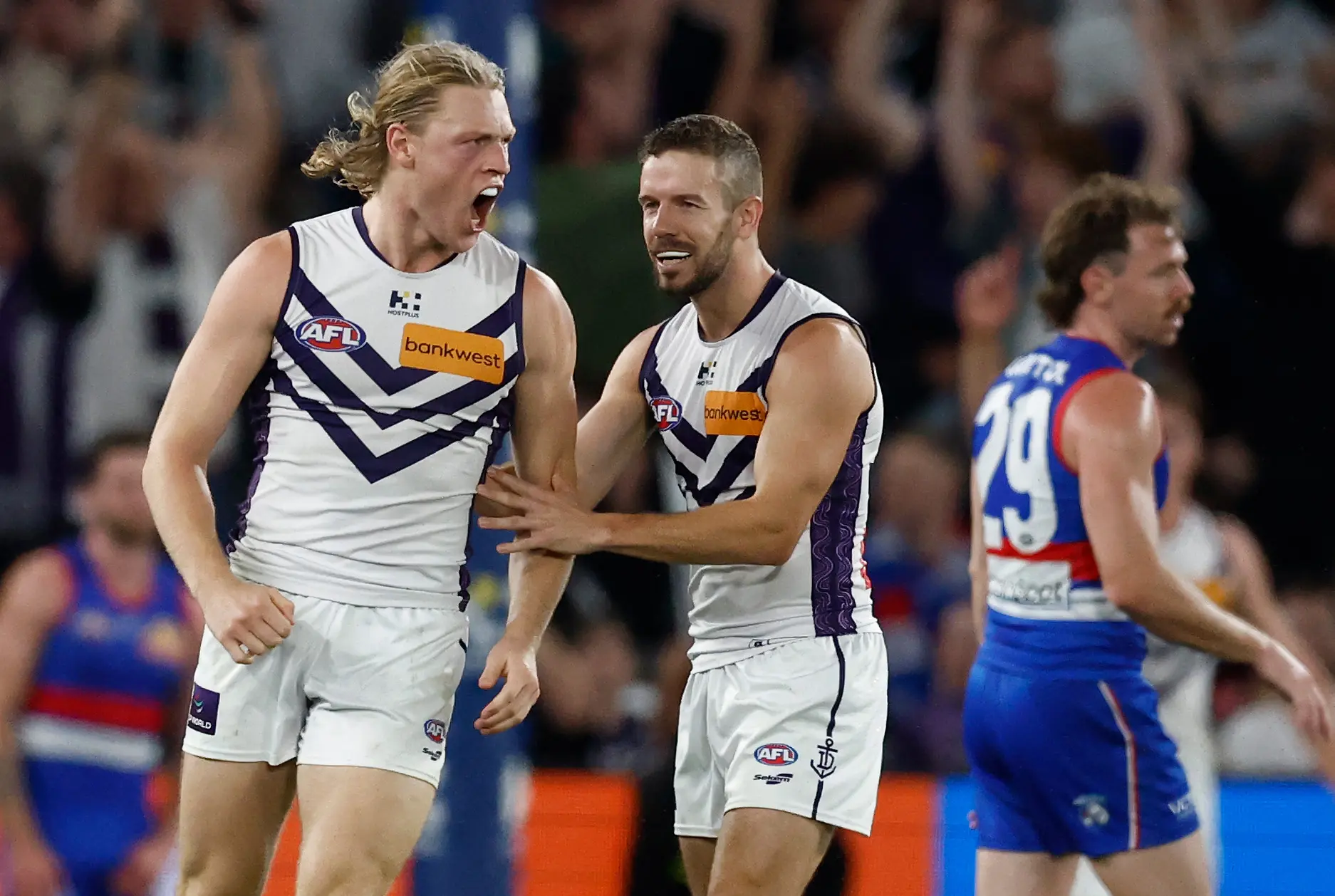
Hayden Young was the first of the three to arrive at the Dockers, and has since been somewhat of a ‘slow-burn' playing more than eight games in a season just three times in seven years.
Despite his lack of continuity on the park, Young's explosiveness within the contest and ability to get forward to hit the scoreboard makes him so valuable to Fremantle when available.
Shai Bolton was next to arrive, pried away from Richmond at the end of 2024. Bolton struggled for his standards in his first season at Fremantle, averaging a modest 17.9 disposals and 6.9 score involvements.
A move to the midfield this season for Bolton attending 61% CBAs (centre bounce attendances) has unleashed him as one of the premier midfielders in the game, now averaging 24.4 disposals and 7.8 score involvements.
The finishing touch to the midfield group is Reid.
The 2025 Rising Star only attends 25% of centre bounces for Fremantle, but that is more than enough to completely turn the game on its head at stoppage.
Reid's slick handball out of contest makes him the perfect link up player at stoppage giving quick one-two's or craftily evading the opposition to waltz out of stoppage to deliver forward.
The solo solution
For the past few seasons, the Dockers have attempted to balance the ruck time of both Luke Jackson and Sean Darcy, splitting the time in the middle at approximately 50/50.
This system worked well enough as Jackson's forward craft was such that it was benefiting the team to play him half the game inside 50.
However as Darcy continued to get hurt, we saw glimpses of Jackson's ruck dominance as every time he was solo rucking, it would be a commanding display.
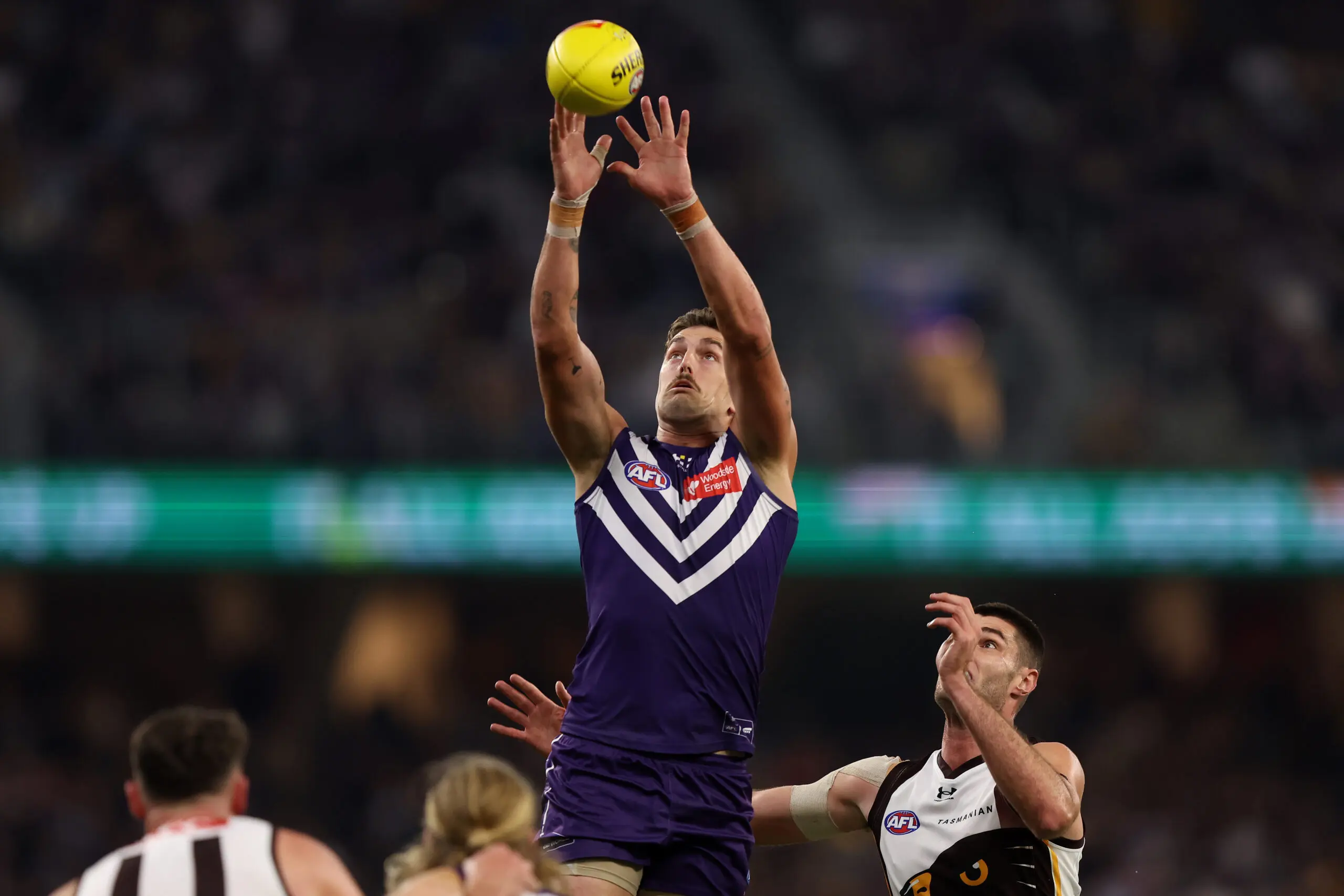
In 2026, Fremantle went back to the patented 50/50 split at the beginning of the year starting 3-1, but then Darcy went down again with a calf injury forcing Jackson to solo ruck against Collingwood.
Jackson prevailed against the duo of Darcy Cameron and Oscar Steene and proceeded to play the next eight games as the number one ruckman for Fremantle averaging 25.3 hit-outs, 19.0 disposals and 0.9 goals.
Jackson is a unicorn-like talent, playing as a fourth midfielder who can outrun any ruck, has elite tap work and hits the scoreboard as well as any ruckman in the competition and is arguably the most important factor to Fremantle's success thus far in 2026.
The scoreboard surge
As important as the playmakers are up the ground, it's the play finishers that put the points on the board.
The Dockers three-pronged key forward attack of Josh Treacy, Jye Amiss and Patrick Voss have been the most dominant goal kicking key forward trio this season kicking 88 goals in 13 games.
It starts with Treacy.
The 23 year old hulk-sized spearhead has been an authoritative presence this year emerging as arguably the best forward in the game.
His contested marking is unmatched, taking great soaring pack marks and aggressively leading up at the ball carrier taking it out in front.
Treacy's averages of 2.2 contested marks and 7.1 marks places him first amongst all forwards in both categories.
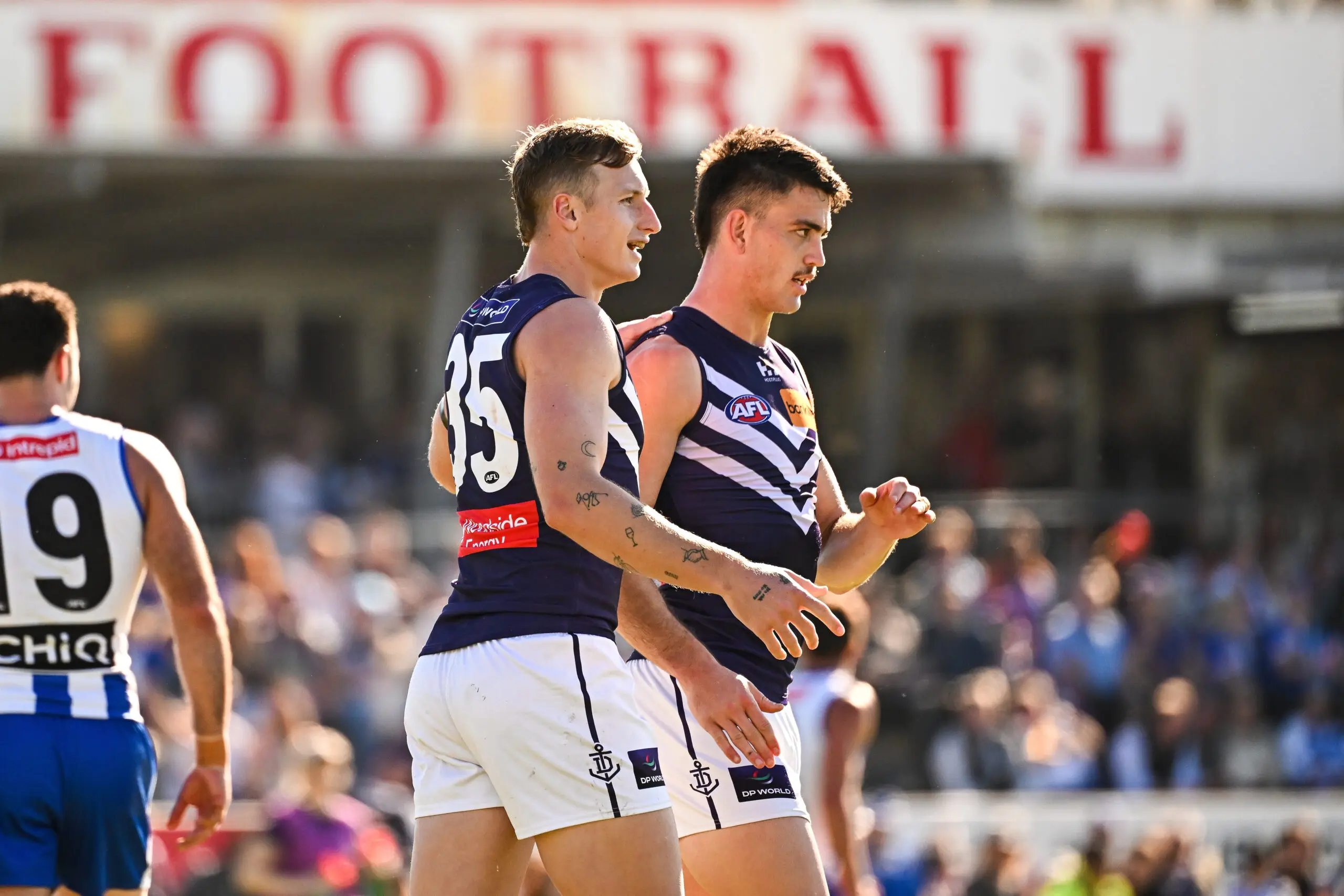
The gravity Treacy has predominantly manned by the best defender on the opposition, opens up the forward 50 for his key forward counterparts to get to work.
Jye Amiss and Patrick Voss are both having career best seasons this year, not just booting big bags, but doing it consistently each week.
Amiss, averaging 3.3 marks inside 50 places him fifth in the league this year and the most as a second forward option by a considerable margin.
Arguably more impressive is Voss who averages 2.5 marks inside 50 per match.
Voss is the third option in the Fremantle forward line, however he has more marks inside 50 than any second option forward.
In the air, the Dockers are elite, but it's when the ball hits the deck that they become their most dangerous.
Small forwards Sam Switkowski and Isaiah Dudley consistently wreak havoc inside 50 providing elite pressure both tackling and on the scoreboard.
The pair zip around the feet of the key forwards, turning scraps into scores for Fremantle.
Further up the ground stand Michael Fredrick and Reid in his primary position as a high-half-forward delivering scintillating ball inside 50 generating scoring opportunities.
The knockout punch
What separates the great teams from the best is scoring from midfielders.
Midfielders like Marcus Bontempelli and Isaac Heeney are almost unanimously considered two of the three best players in the competition with one of the defining reasons being how dangerous they are as a scoring threat.
Having midfielders who can kick goals puts immense pressure on opposition defences and forcing mids to defend harder.
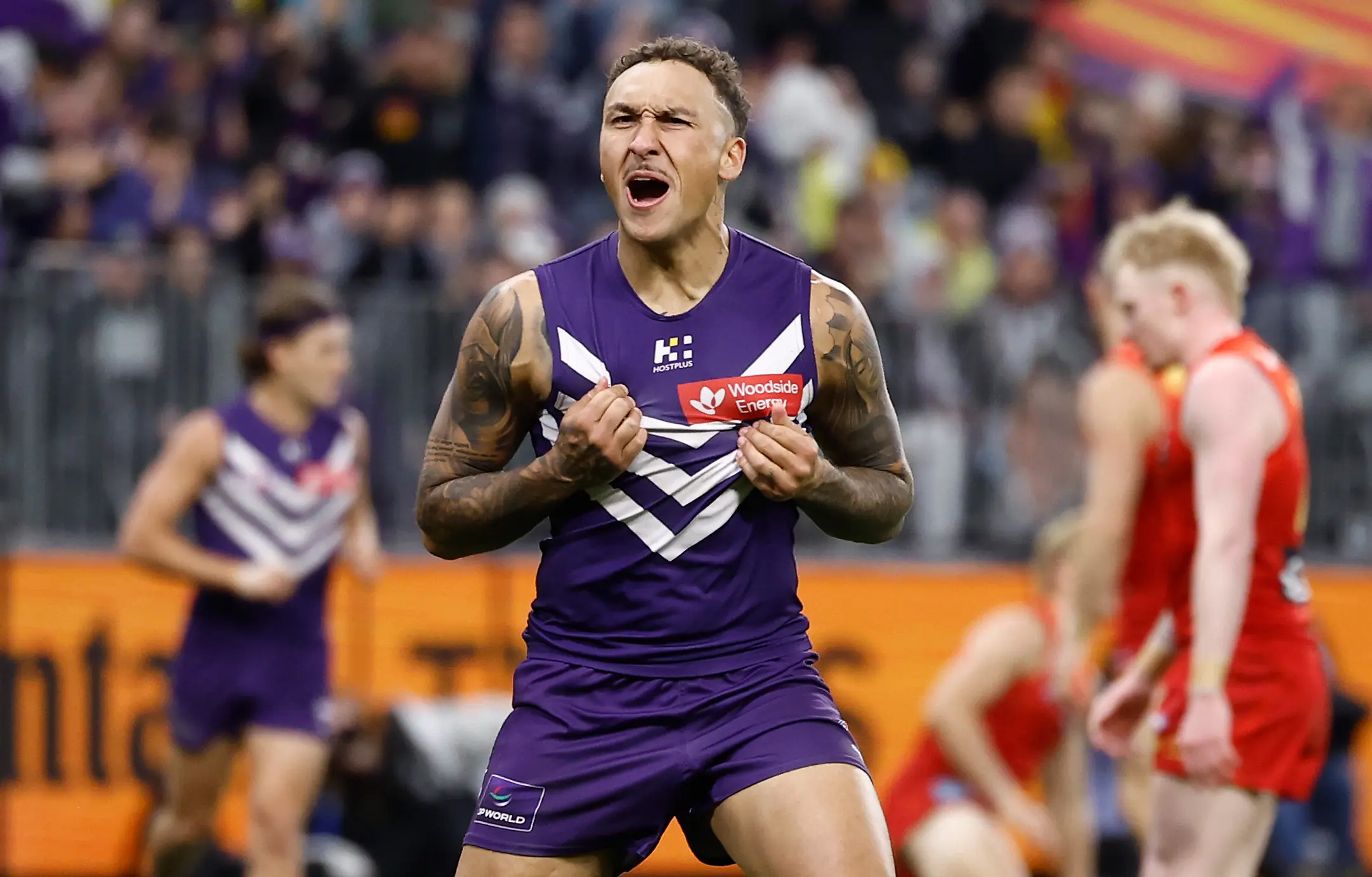
Fremantle is getting elite scoring impact from Bolton and Young, averaging over a goal per match, while also getting 0.9 goals from aforementioned ruckman Jackson.
This accompanied by the damage the forward line already does, shows why the Dockers are a top three scoring team.
The Purple Fortress
Travelling to Optus Stadium has always been a challenging task for travelling teams, however it has gone to another level this season with Fremantle yet to lose a game at home with an average margin of victory at 37 points.
The best teams in the league always take care of business at home and this year is no different with the top three teams Fremantle (6-0), Sydney (7-0) and Geelong (7-0) being undefeated at their home venue.
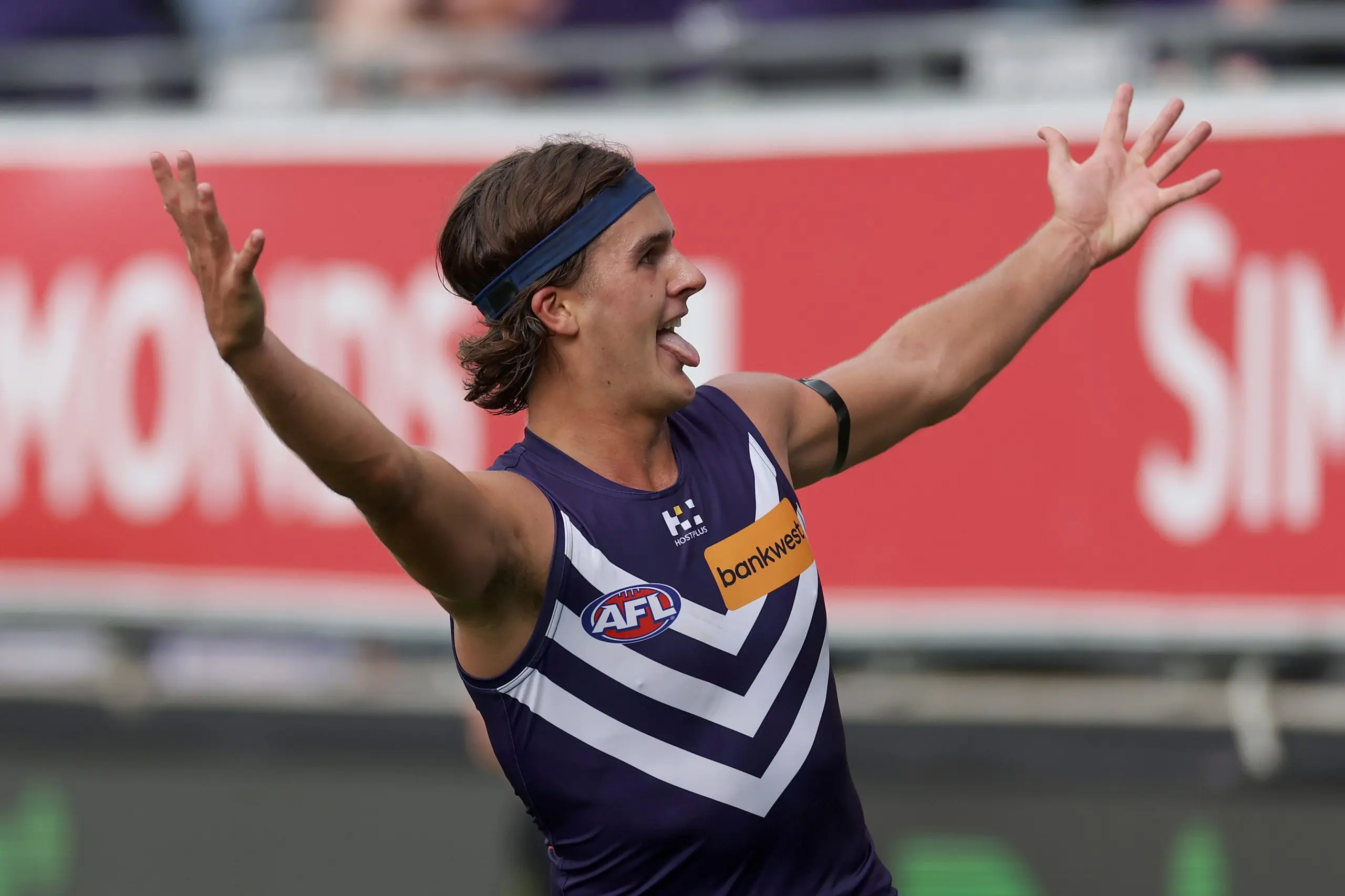
Fremantle's home dominance has been particularly impressive, with the Dockers faithful playing a crucial role at Optus Stadium in “Wharfie Time” victories over Hawthorn and St Kilda as Fremantle surged home in commanding fourth-quarter demolitions.
Fremantle is currently three wins clear of third-placed Geelong while also holding a substantial percentage and a game-in-hand.
Should the Dockers dominance continue, they look primed for a deep run in September placing them in pole position to make just their second Grand Final berth in the club's 33-year history.