First it was Richmond, then North Melbourne and now Western Bulldogs.
The absences of Tigers skipper Toby Nankervis, Roos star Tristan Xerri and impending absence of Dog Tim English has highlighted that none of those clubs have tried and tested rucks in reserve.
"I'm biased, but I think you should always have a second ruck," former AFL ruck Jeff White told Zero Hanger.
Playing as a back-up ruck awaiting injury or suspension is the most unfashionable role in footy - just ask Tom Campbell, who is into his 15th season across four clubs and has just 58 career games.
But for the most part, clubs in the past have had someone to call on if their preferred big man goes down - thank goodness the Lions had Darcy Fort in 2024 after Oscar McInerney's heartbreaking injury.
The Roos were forced to rely on forwards Callum Coleman-Jones and Cooper Trembath to carry the load on Good Friday.
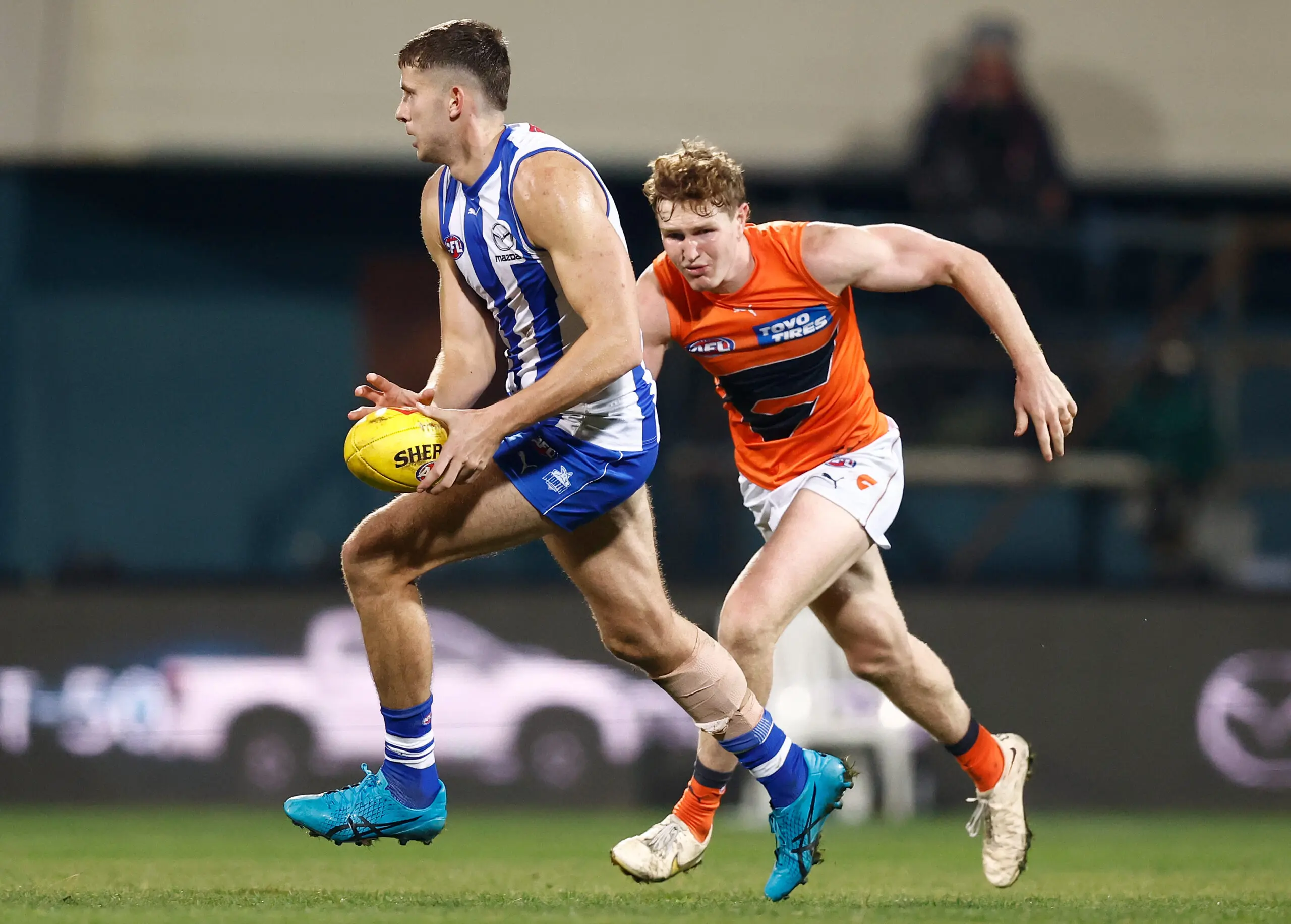
Richmond, meanwhile, have used defender Campbell Gray and Samson Ryan, who looks a step off being an AFL ruck, to cover for Nankervis.
Now, Louis Emmett looks odds-on to debut for the Dogs this weekend, used as a swingman and sharing the ruck load with Rory Lobb.
"A ruck that has had a bit of experience against a forward can play a big difference especially around the ground with the lasso rule, a lot of rucks are going forward or back really quickly and heavily," White said.
"If there's a stop play on the wing, they can use a Paddy Cripps type in the ruck if they get stuck. You have to be adaptable in those situations."
Collingwood and Adelaide also entered 2026 with inexperienced rucks as back-up but have hit the jackpot as Oscar Steene's and Lachie McAndrew's leaps have given them a point-of-difference at centre stoppage.
"On the weekend, Darcy Cameron started forward and they used Oscar Steene for centre bounce and then they swapped straight away," White said.
"So they wanted to use the bigger body at stop plays and the jumper at centre bounce. There are a lot of tactics like that where clubs are identifying the strengths of their rucks and/or tall forwards."

The evolving role of rucks following the AFL rule changes has been heavily discussed in 2026.
The leapers have thrived and the cream of the crop have risen to the top.
With all clubs having played four games now, there is an increasing understanding of the role rucks will play in 2026 and those with the best have benefited more than previously.
While he was critical of the impending rule changes in pre-season, Max Gawn has carried on his pre-eminent form, and it is little surprise that, despite a new-look midfield, Melbourne's on-ballers have fired them to a 3-1 start to the season as the clubs with better rucks have benefitted significantly more than recent years.
Fremantle, Carlton, Adelaide, Sydney, Brisbane are winning the most contested possessions this year - all have recognised rucks they have been able to capitalise on.
Likewise, Western Bulldogs, Brisbane, Melbourne, West Coast, St Kilda and North Melbourne lead centre clearances - all except the Eagles having highly regarded rucks.
But while star quartet Gawn, Xerri, Luke Jackson and Brodie Grundy, in particular, are able to exploit makeshift ruck options, there tends to be a small enough gap between serviceable rucks and makeshift ones to not warrant having a back-up big man.
Highlighting that, North Melbourne won clearances against Carlton, Richmond won clearance and contested possession against Port Adelaide, while the Tigers were exposed badly against Jackson and Sean Darcy's Fremantle.
"I think now with five on the bench, one of those can be a ruck changing forward and four runners. I think because of the rules I would dare say, a lot of the clubs would be looking at the more athletic rucks in this draft and the future," White said.
"The amount of centre clearances that have resulted in goals, Hawthorn on Monday was a prime example. Rucks jumping into each other creates so many different hitting zones is exciting for the game."
St Kilda, Hawthorn and Fremantle have opted for a two-ruck model where possible, but they are the anomaly.
Melbourne, Sydney, Hawthorn, West Coast and Gold Coast all have known quantities in reserve, but there is otherwise a general willingness to take the punt and hope the primary ruck can carry the load, with a chop-out from a key forward.
As recently as six years ago, all but two clubs had at least one back-up ruck that was not playing week-to-week to call on that they knew would compete and had a chunk of AFL experience.
But as other positions have become more important and versatility is at a premium, having genuine, experienced reserve rucks are going out of vogue.
It's yet another layer to the ruck discussion that will continue to take twists and turns as 2026 materialises.