Chris Judd and Gary Ablett Jnr sit comfortably as some of the game's greatest players in AFL history, and have achieved so much but arguably lost the battle when it came to hair loss.
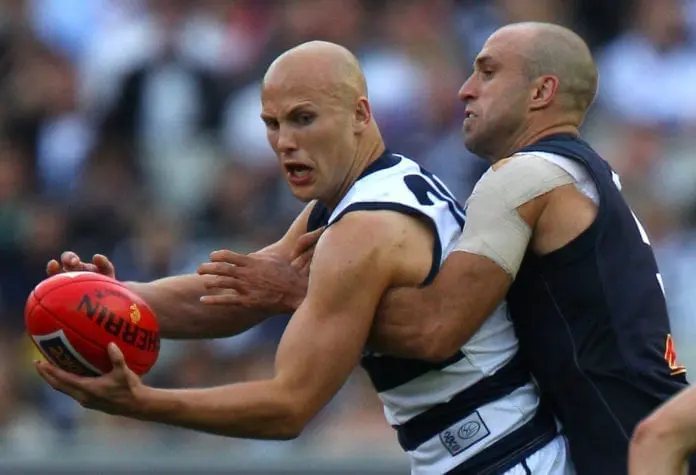
Hair loss isn't exactly an uncommon thing among men, but giving up the battle to keep your hair and shaving it all off doesn't need to happen, with options available to beat the biological timeline.
Pilot has a 92 per cent success rate when it comes to men either keeping or regrowing their hair. If only your footy team had the same level of success!
Most men give up after just two months of hair treatment because they don't see immediate results. But it's not as if you change footy teams after a losing streak, is it?
Plenty of players, both past and current, either didn't know there was hair loss treatment available, or just decided against it, simply favouring to remove it all during their playing days.
So let's run the rule over the best bald players in recent times.
Chris Judd
One of the greatest modern-day AFL players, Chris Judd was a superstar with or without hair.
His brown, wavy locks were synonymous with the Eagles jumper, bursting through stoppages and slotting goals on the run.
A premiership player, Brownlow Medallist, Norm Smith Medallist and plenty of other accolades at West Coast, his on-field exploits didn't change when he lost his hair, and changed his guernsey.
Swapping an Eagle jumper for the navy Blue, Judd added more individual silverware to his cabinet, including a second 'Charlie' as well as more All-Australian blazers and MVP trophy.
Gary Ablett Jnr
He followed in the footsteps of his father, but Gary Ablett Jnr certainly made a name for himself, stepping out of the shadows and casting his own.
Everyone remembers the little maestro kicking freakish goals with long, blond hair. But like his great father, his footballing ability took leaps and bounds as the feathers began disappearing.
A pair of premierships at Geelong, as well as three MVP trophies, a Brownlow and four All-Australian guernseys before he departed to join expansion club, Gold Coast.
Ablett's talents continued in the sunshine state, adding more silverware that makes his CV look like a Sunday shopping list.
A homecoming in 2018 saw the Cats legend don the hoops for a few more years, before retiring as a great of the game.
Max Gawn
The Demons tall is arguably the greatest ruckman to ever do it, and he still has more chapters to write.
Gawn is an eight-time All-Australian, three-time best and fairest winner, premiership player and captain of one of the oldest clubs in football.
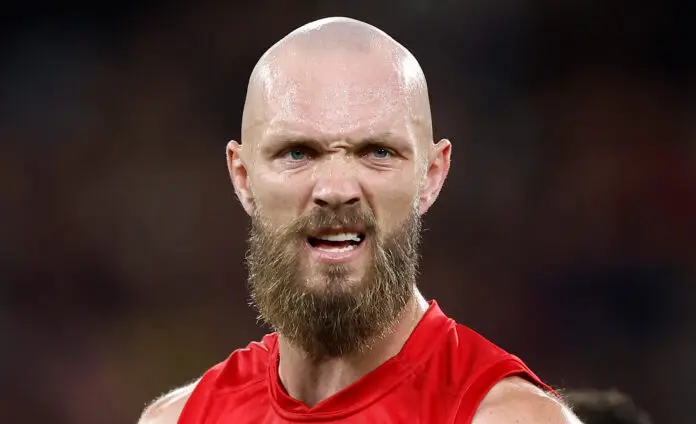
Not many remember the incredible talent with hair, as the AFL community have become accustomed to the scone-beard combination that is plastered all over the ground at Melbourne games.
But he's not done with yet.
Steele Sidebottom
The classy Pie burst onto the scene with dark hair and a freakish ability to use both sides of his body, which has evaporated from AFL football.
Sidebottom has moved smoothly to his career, boasting the widest smile in the competition, and having a no-fuss approach to the rigours of professional sport.
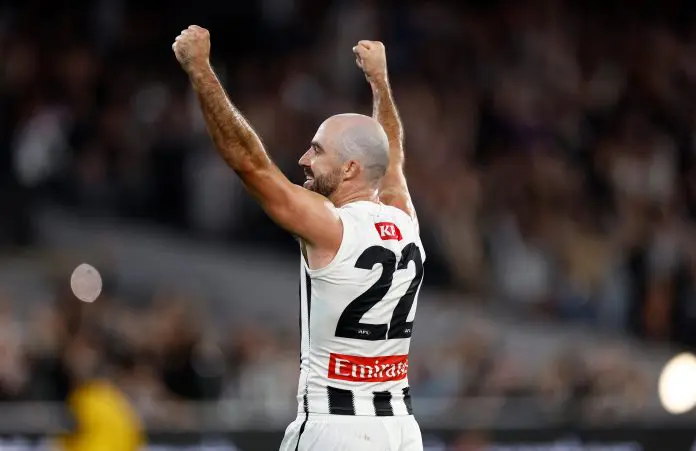
But the 35-year-old is no slouch when it comes to the sport, claiming two flags as well as an All-Australian blazer and two Copeland trophies throughout his 350-plus game career.
Nathan Jones
The heartbeat of the Melbourne Football club, Jones endured one of the club's hardest periods in its long history in the competition.
Playing 302 games, the uncompromising midfielder led the Demons as captain for six years amid a finals-drought, which spanned from 2006 to 2018.
Jones himself only played five matches, and had to watch on as his club, that he helped build from the ground up, won the 2021 premiership.
However, his status as one of the most significant figures in Demons history has never wavered.
Jarrad McVeigh
The star Swan was touted as a gun from his draft days, and he delivered throughout his 17-year career after being taken with Pick 5.
McVeigh stood among a great Sydney club, but was the face of the new era, the Bloods, which saw consistent finals appearances and the ultimate success in 2012.
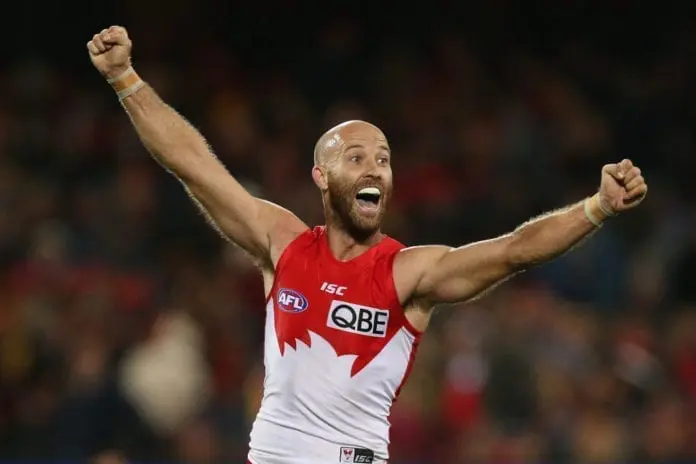
He captained the club from 2011 to 2016, and was an All-Australian as well as a two-time Bob Skilton Medallist throughout his playing days.
McVeigh tallied 325 matches, proving his longevity and importance to the Swans.
Paul Chapman
'Chappy' went about his career quietly among a star-studded Geelong club, but those who remember won't forget how valuable he was to the dynasty side of the late 2000s and early 2010s.
Chapman is a three-time premiership player at the Cats, and secured two All-Australian blazers.
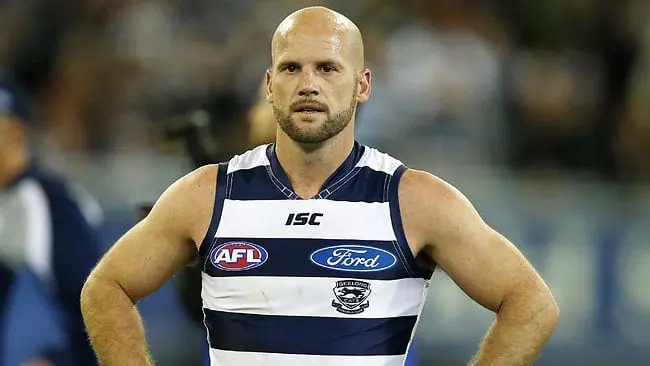
A Carji Greeves medal in 2006 predicted his star rising, while a Norm Smith Medal in the thrilling 2009 grand final contest against St Kilda solidified his placing in the game.
Chapman played 251 games for the Cats, but had a brief continuation at Essendon, adding another 29 outings to his name.
Tom Mitchell
The hard-nosed on-baller redefined contested footy, and actually broke the VFL/AFL record for most disposals in a game, collecting 54 disposals in 2018.
That was the same season Mitchell won the Brownlow Medal, as well as his second best and fairest and second All-Australian blazer.
The left-footer started his career at Sydney, but moved after five seasons to Hawthorn in search of more prominent midfield opportunities.
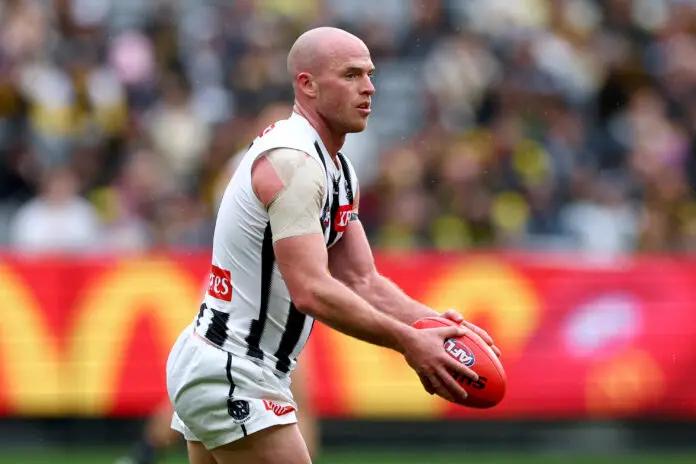
Mitchell asserted himself as a star of the competition, but ultimately found solace in joining Collingwood ahead of the 2023 season.
The switch would prove fruitful, with the Pies and Mitchell claiming the elusive flag.
Mitchell would finish his AFL career with 207 games, but will be remembered for his uncanny ability to extract the ball in contested situations and find teammates.
Andrew Wills
Coined the 'Flying Egg', Wills spent his AFL career across three clubs, beginning with Geelong in 1991. He featured in the Cats' grand final teams in his second and fourth seasons at the top flight, but was unable to secure success in those deciders.
A move to Fremantle in 1995 proved more fruitful from a games-playing perspective, adding 79 matches to his 59 outings at Geelong. Wills finished his career at the Western Bulldogs, notching up another 10 games before hanging the boots up after 148 matches and 127 goals.
The thing that most men don't realise about hair loss and preventative treatments is that it's not an overnight magic trick.
When following the process, 92% of Pilot men kept or regrew their hair.
In Phase One, known as 'The Shed', the Telogen Reset occurs - that is, old weak hairs fall out to make room for stronger ones. This is the “Valley of Disappointment” where most men quit the process, unable to see visible results.
But here is why it's not worth giving up.
In Phase Two - 'The Awakening' - many men experience new hairs beginning to sprout, stabilisation may occur, and hair loss typically stops by the end of six months.
Over the next six months during Phase Three, known as 'The Thickening', fine hairs can transition into terminal hairs. This is what is described as “The Photo Moment”, where visible density returns.
Consistency, even after a year, is important as the "New Normal' phase - the long-term phase of keeping your hair - begins.
Unlike over-the-counter "miracle cures," Pilot connects you with registered Australian practitioners who provide evidence-based, medical-grade treatments.
Complete your consultation in minutes, and have your treatment package delivered discreetly to your door, and, your practitioner is available for follow-ups to ensure your plan is working exactly as it should.
Take control of your hair health. Check out Pilot's Hair Loss Treatment services today.
This post may contain affiliate links, meaning the website may earn a commission from any revenue generated from this article.