Clubs deserve more contact time with their players in between seasons to help prevent injuries, according to former Collingwood sports science director David Buttifant.
The return of players following the Christmas break and subsequent host of injuries has seen the AFL's Collective Bargaining Agreement (CBA) come into question once again.
The current CBA mandates players have a minimum of nine weeks off - a week up from the previous agreement - from the end of one season until the return of pre-season in the new year.
This means that clubs that do not participate in finals could work remotely for around 90 days, depending on their scheduling.
The agreement also states that clubs are "limited (to contact) on a semi-regular basis" during the warmer months, and this is determined by the player's needs and welfare.
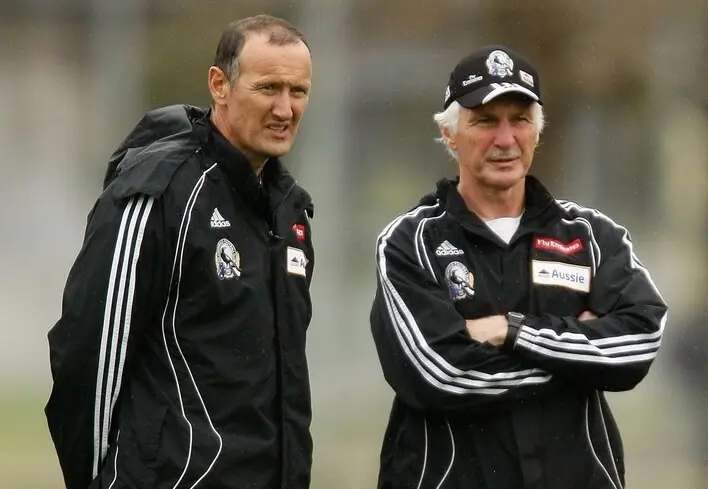
Despite the push to include this in the CBA, Buttifant, who spent 13 years with the Pies during their incredible run of four grand finals under Michael Malthouse, believes it can have a reverse effect.
"I think the thing is that when we give so much time off, it can inhibit development and growth, particularly in some of the younger players," Buttifant told Zero Hanger.
"You're getting maybe three weeks before Christmas as a team collectively, where they're being monitored very closely. Then they have three weeks off. And then pretty much, within a month, when they come back, they're doing games.
"So they're straight into that kind of level of intensity and velocity. So, this predisposes them to injury."
On Monday, amid a return to the pre-season, it was confirmed that North Melbourne defender Jackson Archer and Carlton forward Jesse Motlop suffered ACL tears and will miss 2026.
Collingwood premiership duo Darcy Moore and Jeremy Howe went down with minor calf strains, while teammate Isaac Quaynor tends to a hamstring concern suffered in the new year.
At Port Adelaide, Tom Cochrane has also been ruled out for the medium term after sustaining a "significant hamstring strain".
Part of that predisposition is what players do before returning to the club, as they continue to look for ways to improve their athletic ability.
As all professional athletes do, they search for every advantage possible, which includes seeking external resources.
Players' off-season fitness projects are largely welcomed due to the commitment by the player to righting a persistent injury or simply upgrading from a fitness point of view. However, these projects aren't "monitored" by clubs, which could cause more issues down the track.
View this post on Instagram
"It's not being monitored as closely because they could be going to people that really may be compromising the methodology or principles that the club would want," Buttifant said.
"And that could be an issue. That could create an overload or undertraining kind of plan towards that athlete. So that's what's happening, players realise there's a bit of time off. So they're seeking extra support to get conditioning outside the club circle. So that could be compromising as well. But does it really kind of comply? It may not, or it may.
"How do you ensure there's quality control that what they're doing is aligning to what has been kind of prescribed from them as well, which kind of creates concern."
As a result, players can become more susceptible to injuries, and also an interrupted season, even if they overcome the injury.
"This is the research, and I've backed the research to be exactly the same," Buttifant said confidently.
"If you have an interrupted pre-season through soft tissue or other injury, more than likely you're going to have an interrupted season. These guys who have a soft tissue injury, they do a calf, do a hammy, quad, or whatever, they're going to miss three weeks, right? Minimum three weeks.
"So straightaway, they're not going to be ready for Round 1. Even you might get them up, but they're not going to be ready to go."
The former Pies premiership high-performance staffer believes more contact time would greatly benefit the players from multiple standpoints, as well as alleviate fear in the coaching group.
"I think more contact time would definitely help because then you can monitor, you can mitigate those things that are out of your control. You don't know what they're doing outside the club at times," Buttifant added.
"It's not just from a coaching perspective, it's from a well-being perspective. Because coaches and staff have a good connection with these younger athletes, or any athletes for that matter, to help support them.
"And particularly the younger cohort, because [first top third-year players] are four times more likely to get injured than your older players. So they don't have the condition and history behind them.
"So, I kind of feel that their time is too long off."
Get set for the footy with the FREE Zero Hanger 2026 AFL Season Guide! Packed with 150+ pages of player profiles, team previews, insights and analysis, the 2026 AFL Season Guide is built for fans who want the full picture. Download your free Season Guide HERE.