



AFL heavyweight Tom Harley is a slick operator with unquestionable integrity, but this week's launch of the league's Cultural Heritage Series was still a tad uncomfortable.
Harley, the league's newly appointed chief operating officer, joined AFL cultural diversity ambassadors Isaac Quaynor, Jayden Nguyen, Akec Makur Chuot and Mua Laloifi on Wednesday to celebrate the diverse communities that shape Australian football.
It had a tinge of uneasiness as it came in the days following AFL chief executive Andrew Dillon being grilled about Sydney failing to reference the Jewish community in its Opening Round Bondi tribute and amid the league's referral to the Royal Commission on Antisemitism and Social Cohesion.
Harley on Wednesday professionally answered three questions in relation to the incident and the AFL's relationship with the Jewish community, but he failed to address the crux of the issue.
Former State MP and Minister Philip Dalidakis, a member of the Jewish community, spoke to Zero Hanger about the timing of the launch and if the league had done enough.
"I'm not uncomfortable with the timing if the AFL has implemented a range of actions or plans to address issues," Dalidakis told Zero Hanger.
"What the tragic events of December 14 have done is held a spotlight up to a minority group which has felt targeted.
"The next step is ‘what the AFL is going to do if they have heard that?'
"What can the AFL do to ensure they lead a response that is appropriate. That's not just for our community - our community is an example of what they failed to do well and need to do better but it is true for every minority community."
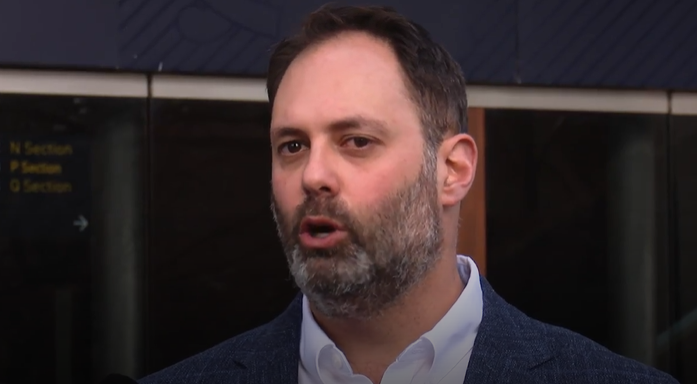
Swans CEO Matthew Pavlich has taken accountability for the error and the Swans released a statement which apologised, but there has been no suggestion of action being taken or work being done to improve relations.
Harley noted that the launch was the perfect platform to have such discussions in answer to a question about treatment of the Jewish community, but did not elaborate, nor use the opportunity to offer a strong view on the incident.
The AFL has aligned itself with values and causes to improve inclusion across the past decade which has prompted mixed responses from footy fans.
But the irrefutable truth is that if an organisation is going to be active in the political space, it needs to do so consistently and equitably.
"I think it left people in the community asking questions about why are we treated differently to other minority groups?" Dalidakis said.
"For example, the work the AFL has rightly put into the LGBTQIA+ community is important because people use the saying you can't be what you can't see in relation to gender equality issues - that saying is true of every minority group so I give credit to the AFL for trying to stamp out homophobic slurs on field and trying to encourage players to identify more freely and more openly.
"If you want to partake in a range of feel good community values, (and) you don't do it for one section of the community, questions get raised. It's either one-in all-in or you don't do it for anybody."
Nineteen-year-old Jayden Nguyen spoke beautifully about wanting to be a figurehead for Asians by showing them what is possible.
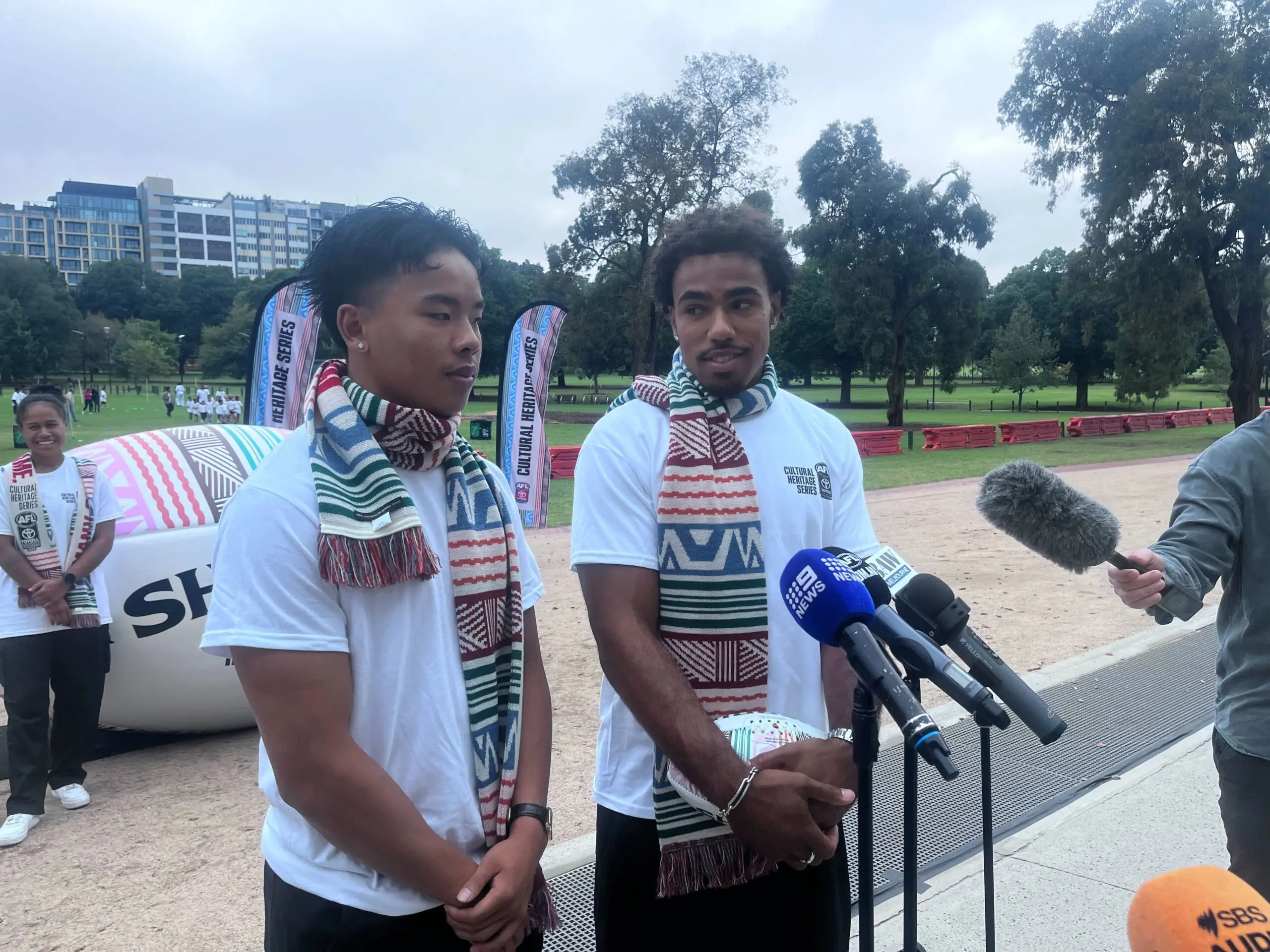
Visibility of multicultural communities in the industry is critical for the AFL to accelerate fandom and participation as it aims to attract 10,000 first time attendees through the 18-game series.
Across different sections of the industry, there are members of minority groups including Jews, who should be used as a tool to ensure responses are holistic and culturally sensitive.
Currently, the public is not privy to any action the AFL or the Swans have taken, if any, following the Opening Round incident.
With members of the Jewish community across a range of roles and administrative positions at junior, club, AFL executive and commission positions, they certainly have the internal nous to draw on.
"Has the AFL looked to set up an advisory group?" Dalidakis asked.
"To my mind they haven't. They might have an informal one but they might like to set up an advisory group to respond and give them direct feedback.
"Maybe they need to get better at listening to people internally but if they're not and need an advisory group of independent externals, they would be welcome to give me a call and I'd be happy to give them my support and advice."
Chuot, one of the game's most synonymous multicultural ambassadors, spoke about her unbelievable journey at the launch; Laloifi expressed her hope that she could help more Polynesians choose footy; Quaynor highlighted the impact of Collingwood's Next Generation Academy; and Nguyen spoke of his relationship with AFL Vietnam, who he connected with in the off-season.
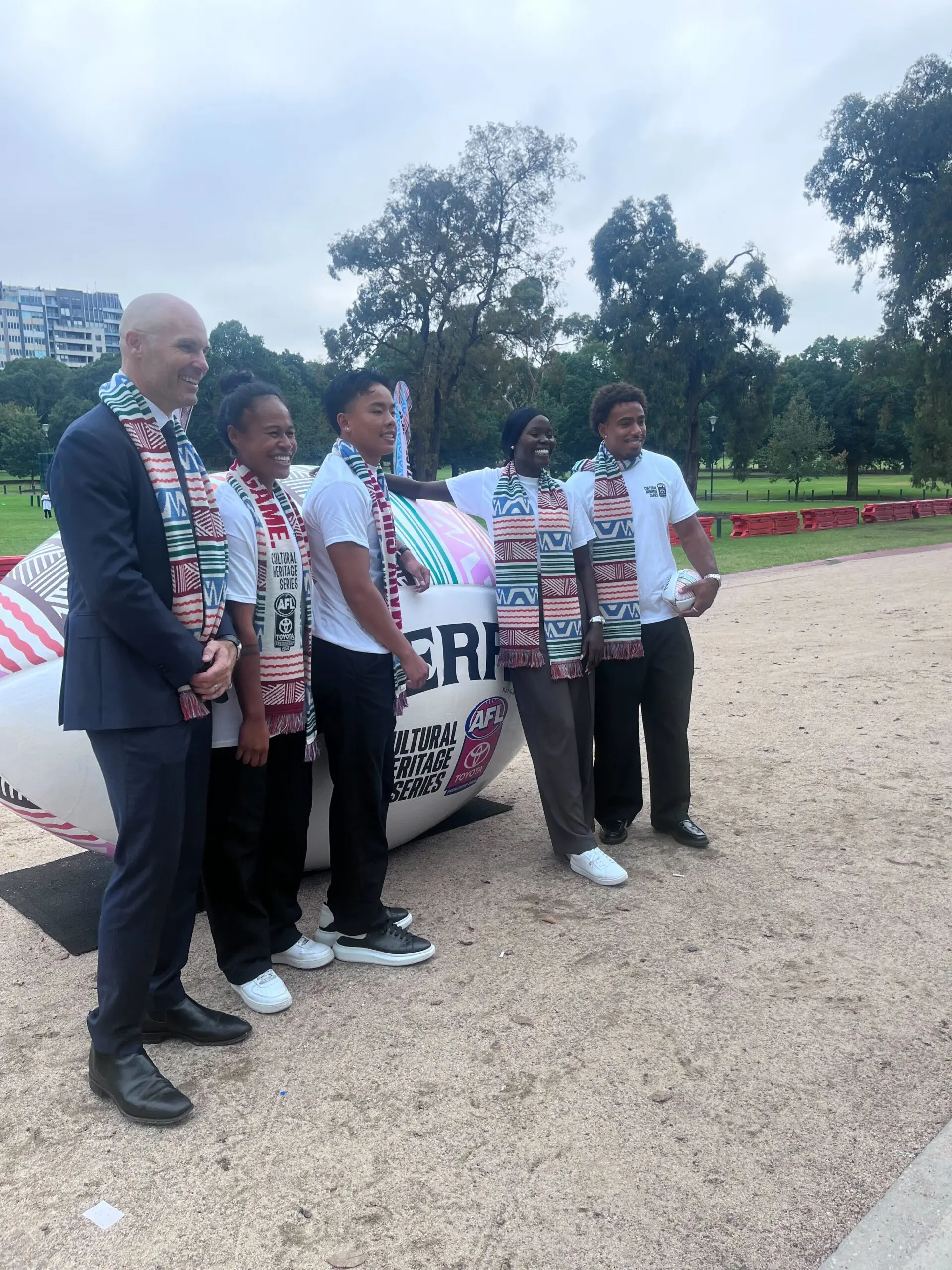
All are brilliant case studies of the positive platform the AFL can be.
But how can you pat yourself on the back and celebrate all the good at a time where the news of the day is about the AFL's error in judgment towards a minority group?
Nguyen's message to young footballers from culturally diverse backgrounds was to "believe you belong" but would members of the Jewish community have felt a sense of belonging if they witnessed the AFL celebrating its progress in the cultural heritage space?
"They want all communities to feel safe and part of the game and all communities should be respected. If that's their mantra, you have to walk the walk and that circles back to the events of (Opening Round)," Dalidakis said.
"It took the gloss off what was a very touching idea and tribute given it came some months after December 14.
"It was a beautiful and touching way to do that but the omission of the Jewish community in the spoken word left a sour taste in everyone's mouth which gave the impression it was tokenistic."
Dalidakis did stress his belief that the Swans and the AFL were trying to be sincere in honouring the Jewish community, first responders and the wider population.
Harley has been in the AFL for more than two decades and correctly indicated that significant growth has been made in that time.
"(The AFL's progress) has mirrored society is the way I would frame that," Harley said, in part.

Those comments are spot on and would explain the AFL's caution on issues relating to the Jewish community.
Unlike other minority groups who are viewed as politically correct to support, society has complex and differing views on the Jewish community and the AFL's silence gives the impression that taking a side isn't worth the hassle. Unfortunately for the league, by staying silent, it is seen to not be supporting the Jewish community.
Undoubtedly, the AFL has done important work in the space which ought to be acknowledged.
But clearly more work needs to be done.
"I think the AFL needs to be clearer about ensuring their words are words they live by," Dalidakis said.







“Unlike other minority groups who are viewed as politically correct to support, society has complex and differing views on the Jewish community and the AFL’s silence gives the impression that taking a side isn’t worth the hassle. Unfortunately for the league, by staying silent, it is seen to not be supporting the Jewish community.
Undoubtedly, the AFL has done important work in the space which ought to be acknowledged.
But clearly more work needs to be done.”
What rubbish.
Simply make the clear (and rather obvious) distinction between Jews and Israel.
Then Jews are included with every other minority as actual people – not as effigies.